


An obscure, nearly 30-year-old song is now revealing some history about its local creators after recently being released across all online digital music platforms. While not widely recognized for their lengthy tenures as music industry professionals in the 1990s and early 2000s, Middle Tennessee residents Brian and Jill Hardin have since become very familiar to the legions who listen to the Daily Audio Bible, hosted by Brian and sometimes assisted by Jill. The podcast, which delivers the Holy Bible from front to back on a year-long installment plan, reaches an estimated 1.5 million listeners each month from the Hardins’ home in Spring Hill.
As part of the pair’s plan to celebrate the podcast’s 20th year in existence, they have begun releasing special musical content from their past. The first of these is “I Found Grace,” produced and co-written by Brian Hardin. The track originally appeared on Jill’s self-titled 1998 album Jill Parr, her first foray into the then-booming Contemporary Christian Music genre. CCM was the primary format in which the two worked: Brian, a keyboardist, songwriter and audio engineer, later became established as a record producer. In that role, he met and worked with Parr, an in-demand session vocalist. Parr and Hardin would later marry and create a trio of progressive Christian pop-rock albums released under her maiden name.
“Working with Brian is when I flourished as a solo artist,” says Jill, whose professional career began in her childhood and included both solo and ensemble work in the gospel genre prior to relocating from the Detroit area to Nashville.
The potency of their collective talents is evident enough on the original 1997 recording of “I Found Grace,” included on the four-song EP released via Daily Audio Bible in March. A gently insistent mid-tempo track highlighted by swooping fretless bass and a hypnotic four-chord synthesizer phrase, it rides on a shifting musical structure that underscores its lyric’s quest for emotional equilibrium in the face of human limitations. Exploring complex emotional terrain atop this fluid landscape, Jill’s expressive vocal tackles a messy mixture of searching and identity confusion in which hopelessness and surrender seem to collide: Well, I lost myself and I lost my mind / And I lost my need for something more / And I locked my will up in a box and left it at Your door. As the song’s key temporarily shifts upward, signaling unanticipated possibilities, its hook line delivers the title’s redemptive payoff: Gave up my pride and found relief in the shadow of Your face / That was when You found me . . . and I found grace.
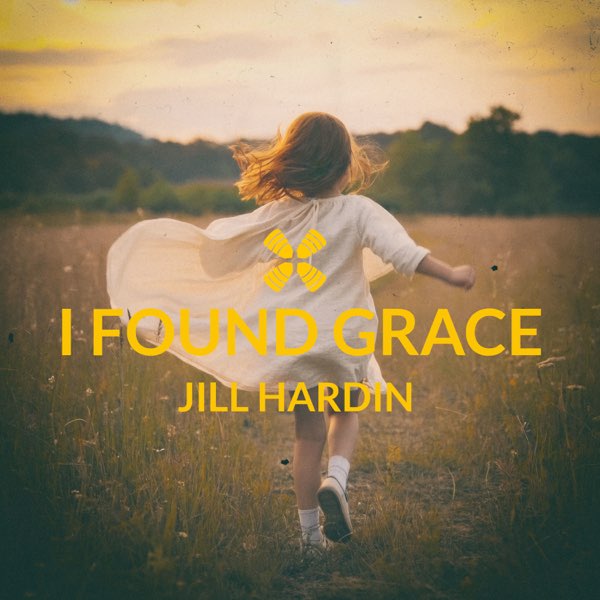
The I Found Grace EP also includes an all-new recording of the song that closely follows the shape and musical details of the original track but has been updated using today’s vastly advanced technology.
“We created [the new version] as a way of bridging who we were with who we’ve become,” Brian says. “We didn’t create it for success—and that is a very different place to create from. We created it to reveal ourselves and to encourage the Daily Audio Bible community that has shared a couple of decades of history with us.”
Regarding the overall similarity of the two recordings, he says there seemed no need “to put a different spin on a groove that worked and communicated well. The tools that are available to create music now,” he notes, “were science fiction when the song was originally created. We wanted to retain what worked originally while modernizing it sonically.”
Enhanced with a more dominant electric guitar and a punchier low-end presence, this version—both in terms of Jill’s comparatively edgier vocal performance and the song’s still-potent references to unsettling inner struggle—is one that the conservative and highly commercially-driven CCM industry of the late 1990s might very well not have welcomed, if the genre’s history is any indication.
As the ‘90s unfolded, CCM had grown so successful in its market segment that it attracted the interest of major secular record companies, which began to impose strict formulas based on marketing data: namely, that CCM’s customer base was dominated by conservative white American moms seeking “safe” soundalike-lite alternatives to shield their children from the influence of secular pop, rock and rap acts dominating the cultural spotlight. The buying audience, in essence, possessed power to define what a “Christian” song is, albeit in very basic terms—songs with upbeat sentiments that referenced and rightly celebrated Jesus Christ as Lord and Savior, though in contexts that some considered artistically restrictive and lyrically one-dimensional.
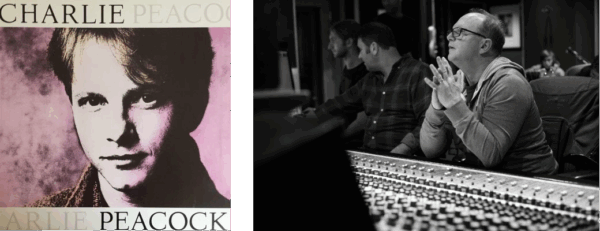
One of the format’s most articulate and outspoken critics, perhaps surprisingly, was one of its own: six-time Grammy winning producer, songwriter and CCM recording artist Charlie Peacock. Leading the charge among rising concerns about contemporary Christian music’s increasingly contrived sound and the unapologetically worldly business methods pumping it for a maximum payout, Peacock presented balanced yet challenging views in his book At the Crossroads: An Insider’s Look at the Past, Present, and Future of Contemporary Christian Music, released in January 1999. By year’s end, the three-time Gospel Music Association Producer of the Year would turn heads industry-wide by stepping down to attend seminary and rethink his future in music—which would later include helming the massively successful career of boundary-pushing Christian-rock band Switchfoot. (The subject of Peacock’s writings is still ricocheting across the media landscape 25 years later; Dr. Leah Payne’s intensively researched 2024 book God Gave Rock and Roll to You digs decades deeper into the story and traces a wider arc, while the crowdfunded, still-in-production documentary Safe for the Whole Family: How to Make a Christian Superstar, previewed in a video teaser, takes an uncompromising look at CCM that features unfiltered insider information.)
The writing was on the wall by the end of the ’90s, and while CCM remained highly profitable through the early 2000s, the fortunes of many would begin a downward shift, particularly in the artist realm. As Brian confirms, “The market changed. A lot of people got hurt and careers ended” during this period. For those who still hoped to find acceptance in the CCM marketplace, once a safe haven for faith-based writers and performers, it would become increasingly difficult to pursue music with a personal and creative vision, if at all.
Though they made only a modest commercial impact, Jill Parr’s three solo albums leaned toward an artistically adventurous sound featuring emotionally nuanced lyrics, a package well suited for savvier post-adolescent listeners. As testament to their progressive sensibilities, the couple also sprinkled in covers of inspirational-themed secular tracks by forward-thinking artists such as Sting (“If I Ever Lose My Faith in You”) and Peter Gabriel (“In Your Eyes”) alongside original material. A very similar approach, though done exclusively with original songs, had proven successful earlier in the 1990s for husband/wife alternative-pop duo Out of the Grey, a Charlie Peacock-produced act that scored several CCM hits while striving to sidestep the industry’s increasing demands to create a narrowly defined product. The duo’s singer and primary songwriter, Christine Dente, has in recent years written about the awkward dance of satisfying one’s creative inclinations while pleasing the executives who provide the means for their musical careers.
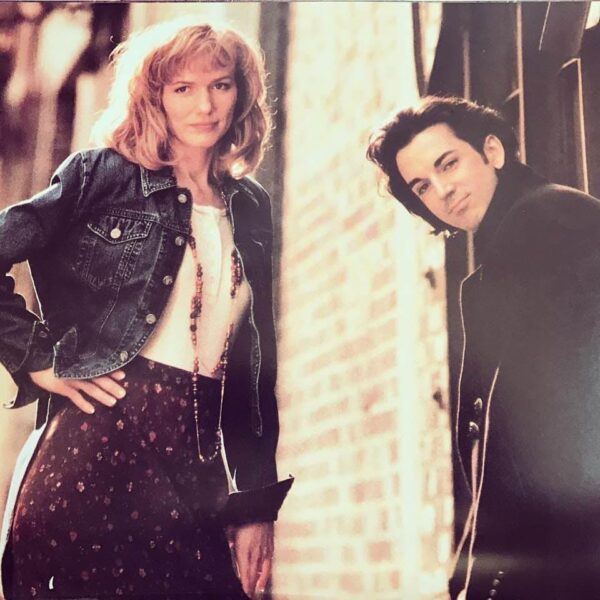
CCM recording artist Out of the Grey: Christine and Scott Dente, circa early 1990s
In a WordPress blog post unfortunately no longer accessible in full via the internet, Dente shared about her and husband/guitarist Scott’s encounters with the realities of a professional career as recording artists. “Once upon a time in Christian music,” she writes, ” there were gatekeepers who stood along the boundary walls, deciding whose music was fit for Christendom.” These, she noted, included not only record executives and decision-makers at major radio stations but also the owners of brick-and-mortar Christian shops who knew their customers well and were wary of anything that might appear too worldly.
“From labels to radio, there were hoops to jump through . . . and we and those guardians of the CCM galaxy did our part to keep radio programmers happy,” writes the singer-songwriter, who goes on to relate a story about Out of the Gray’s 1991 album track “Time Will Tell.” A song addressing Dente’s own struggle with anxiety and fear of the future, while it affirms faith and hope as ways to navigate such distress, was chided as “not Christian enough.”
Dente, who has gone on record saying she’s attracted to a lyric “that doesn’t spell everything out,” was urged to draw a clearer connection between the song’s troubled emotions and a specific trust in God as the correct response. Her original lyric—So I give up on myself again / Help will come, I can’t say when but time will tell—was revised to So I give up on myself again / Help will come but only when it’s in Your time. The notion of God being present in times of difficulty, even when relief may tarry, is indeed one in which many may find comfort. Still, a personal expression that Dente had intended as a universal message of encouragement was roped into one that sacrificed authenticity, resonating only with the converted.
The Hardins, who Brian says “loved Out of the Grey” and allows that the popular husband-and-wife duo might have influenced the couple’s own direction on songs such as “I Found Grace,” also “were trying to write what we felt and what moved us. We were trying to write music that we related to,” he says. Having entered the arena as fellow artists seeking chart and retail success, the couple would soon experience the same creative tension experienced by the Dentes, who by 1999 had been dismissed from their record label.
“Creativity felt limited by formulas of the industry itself,” Jill affirms. “When lyrics presented questions of faith and acknowledgement of the struggles of life, we were often redirected. This was frustrating,” she adds, “because the struggle of life binds humanity together. ‘Jesus juking’ to dismiss human struggle diminishes the humanity of a Jesus who understands, sees, and feels our struggles. It also creates an avoidance within a Christian culture that could be known for its empathy, compassion and shared experiences. We can’t do this,” she says, “if we don’t acknowledge the struggle that life and faith can be.”
On recent podcasts, the Hardins have spoken openly about the numerous difficulties they experienced while launching Jill’s solo career and later surrendering their music livelihoods to pursue the Daily Audio Bible full-time. Setting the context, Brian explains that he and Jill “existed in a time when the [Christian] industry had organized itself, and competition for celebrity was a real thing.” Recalling a conversation with an artist from music’s Jesus Movement (a fully independent, artist-driven eruption that produced the first wave of then-unheard-of Christian rock beginning in the late 1960s), Hardin relays that unnamed artist’s kernel of truth: “When Christian music started having album sales charts, the magic left—because it ranked the value of one artist over another and created a competition that perhaps should have never existed.”
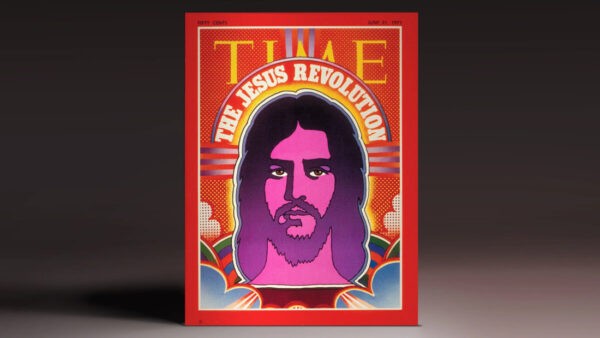
TIME‘s July 21, 1971 cover story reported on the Christian youth revolution that had sprung up on the West Coast in 1969, spreading across the U.S. and well beyond. At its center was the controversial musical innovation known as Jesus rock—the predecessor of the more commercial CCM genre that dominated in the 1980s and ’90s.
It was disillusioning, Jill says, to learn that career aspirations sometimes meant being viewed as an opponent by fellow believers. “Not falling into the trap of comparison and diminishment,” she says, “is nearly impossible when you’re competing for radio, charts and tours.” She now reckons that it was “delusional to think that I could reach across labels to form friendships [with fellow artists]” or to hope for a more experienced artist to mentor her through the unsteady first steps of being signed to a record contract. “That,” she says, “was maybe the most heartbreaking and disappointing aspect of the industry for me.”
“For me,” Brian says, “it was the misguided expectations of ‘trying to do something big for God’ juxtaposed against the reality that there was massive competition and strategy involved. It was the unspoken expectation that success would be easy and God would make it easier. It was the realization,” he says, “that CCM was based upon the framework of the entertainment business with all the trappings and traps involved in having a public persona.”
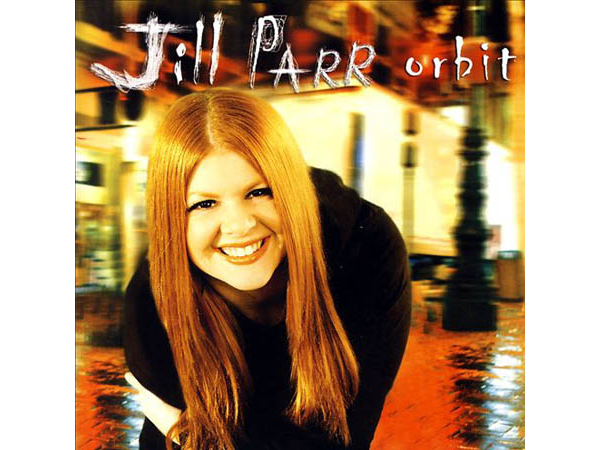
When challenges arose that threatened his career stability, as Brian admits, he realized that his own spiritual life was less than robust. Like the majority of fellow believers, he’d never read the entire Bible. With CCM record sales beginning to wane, trouble had begun brewing in the format’s business infrastructure, leading to the bankruptcy of the record label that had signed Jill and released her second album, 2003’s Orbit. “We were hurt financially in that situation,” Brian says, “which caused me to really question what I expected from the industry versus what it actually is—business. Perspective can be cloudy when business success is merged with spirituality. In the end, he says, the crisis “was a catalyst for my personal faith.”

The pain struck even deeper, though, as the couple came to terms with a crumbling industry to which they’d attached their identity and artistic dreams. Though still maintaining a music career and working on a third album for Jill, Brian obeyed a sense of calling to start podcasting the Bible, which he’d begun reading in earnest—and finding to be life-altering. Posting his email address on the internet and inviting others to join him in his journey, he began the Daily Audio Bible on Jan. 1, 2006. To his surprise, 250 listeners sent emails expressing support, and within six months the podcast had reached 200,000 downloads.
“We were seeing impact at DAB that was unprecedented and beyond anything we had done musically,” he begins. “It challenged our identity and dreams. It challenged our faith. It’s a hard thing to discover that what you were made for was different than your youthful ambitions. Personally,” he confides, “it was deeply challenging for us to find our place together when music had been the connective tissue and glue. It took a lot of years to give up the ingrained sense of competition from our culture and from the music industry. It was a path of long-term surrender that challenged everything and evolved us into better people,” says Hardin, who retired from the music business (though not from music-making) and has since become an ordained Anglican clergyman.
Looking back at the origin of “I Found Grace,” Hardin says the song “reflected on the mistakes, confusion and coping strategies of our twenties.” Revisiting the song more recently, he says, “we came to the same conclusions—when we lose ourselves we find grace. However, to truly experience grace,” he says in elaboration, “we must lose whatever else we are relying on to understand that God finds us in surrender.
“By the time we began the Daily Audio Bible,” Hardin says, “the industry had begun to implode. We would have been swept away in it. But we found grace.”

Near the end of April the couple released a second song, “When the Bough Breaks,” featuring their son Ezekiel. As with the Grace EP, it’s available in an all-new recording plus the 1997 original, an instrumental “karaoke” version and a remix by the Hardins’ son Maxwell, with accompanying videos available on YouTube. The release of these vintage recordings serves as a reminder that an inspired and well-crafted song, particularly when it carries the timeless message of grace, perhaps never truly goes out of style.