

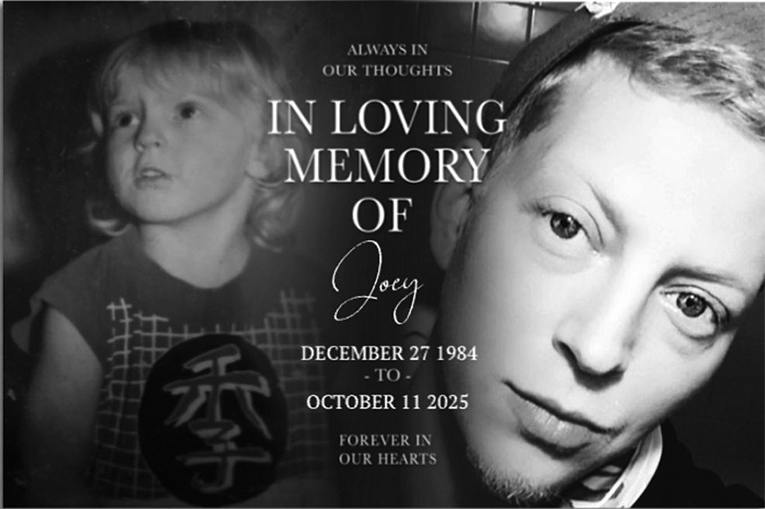
by Cindy Pendley
On Oct. 11, 2025, my young nephew, Donald Joseph Stafford, took his own life on the sidewalk in front of the Papa John’s restaurant on Memorial Boulevard in Murfreesboro where he had worked. His co-workers were gathered, watching the drama outside between Joey and one of his managers. That’s when he did it. Joseph, at the age of 40, pulled out a gun and shot himself in the head.
That’s a horrible thing to witness up close, especially to someone you know and see every day. Many of those who were nearby will need counseling for a long time after witnessing something like that. It’s not something you can get out of your mind.
Joseph was a good man—loved by his family, loyal to his friends, and hardworking. None of us can quite make sense of it. We knew he had been struggling, but we didn’t realize how deep the pain had gone until it was too late.


Now, in the middle of unbearable grief, I can’t stop thinking about how important it is that we pay attention—truly pay attention—when the people we love are in distress.
Mental health crises don’t always look exactly like what we expect. Sometimes the signs are loud—talk of hopelessness, sudden anger or withdrawal. But just as often, they are subtle. A person might seem tired or distracted, or suddenly stop talking about future plans. They may begin giving away personal items, isolating themselves, or acting “off,” even if they insist they’re fine.
In Joseph’s case, there were signs, small ones at first, that in hindsight seem so painfully clear. We wish someone, anyone, had understood what those signs meant. Joseph actually told people that “death is around the corner.” No one heard what he was trying to say.

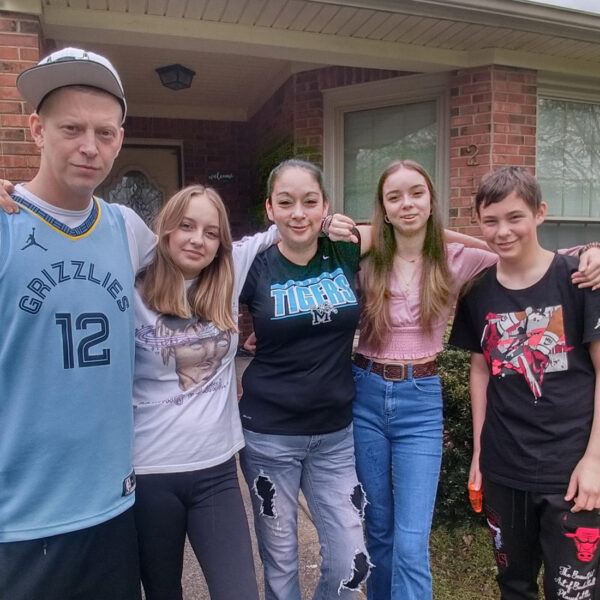
Now, his loved ones are struggling to pay for funeral expenses while carrying on with their lives.
Family members have set up a GoFundMe campaign to help pay off the funeral debt, all of those proceeds going directly to Jennings & Ayers Funeral Home.
If someone you know seems “different”—quieter than usual, withdrawn, reckless or preoccupied—don’t ignore it. Ask questions, even if it feels uncomfortable. Say things like: “I’ve noticed you don’t seem yourself lately. Are you okay?” or “You’ve been on my mind a lot; can we talk?” It’s better to risk an awkward conversation than to regret staying silent.
If you believe someone might be in danger, never assume that others are handling it. Tell a supervisor, call a family member, or reach out for professional help. If there’s an immediate threat, call 988, the Suicide and Crisis Lifeline. It’s free, confidential, and available 24 hours a day. They can send trained crisis responders and guide you on what to do next. Many communities also have local crisis centers, mobile crisis units and nonprofit counseling services that charge on a sliding scale or offer free sessions. For those with limited means, organizations like the National Alliance on Mental Illness or local health departments can help connect people to no-cost resources.
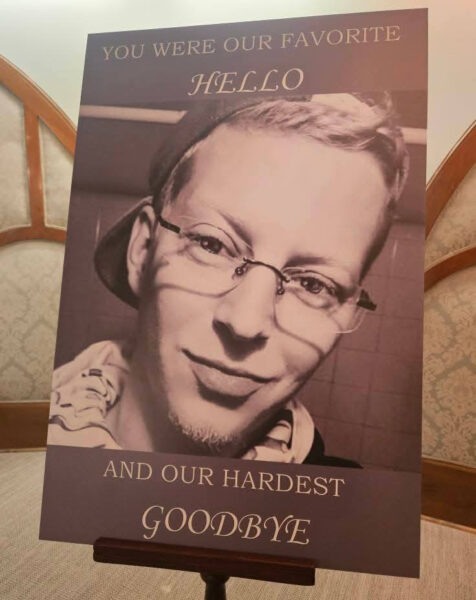
We can’t bring Joseph back. But maybe his story can help save someone else. Please, check on your friends, your co-workers, your family members. Don’t assume they’re fine because they smile or show up for work. Sometimes the people who seem strongest are the ones who are barely holding on. Pay attention. Ask questions. Stay with them. It might just be the moment that keeps them here.
To donate to Joseph Stafford’s funeral expenses, visit tinyurl.com/joeyfuneral.