

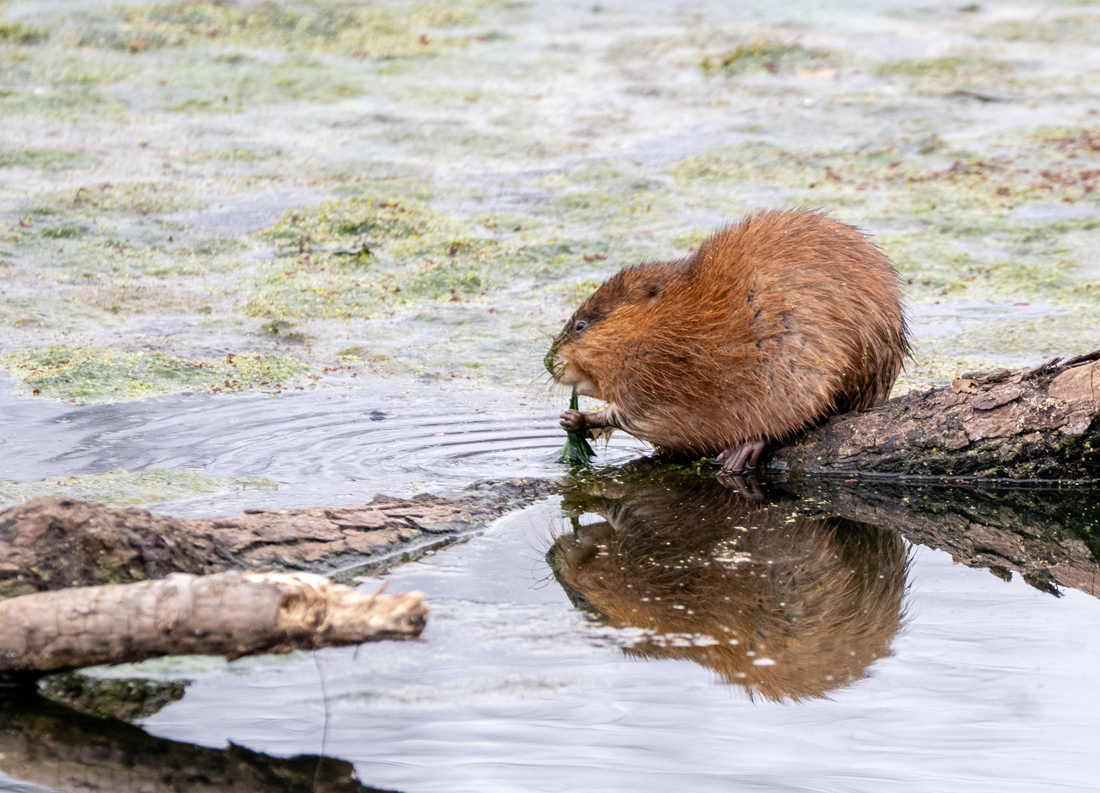
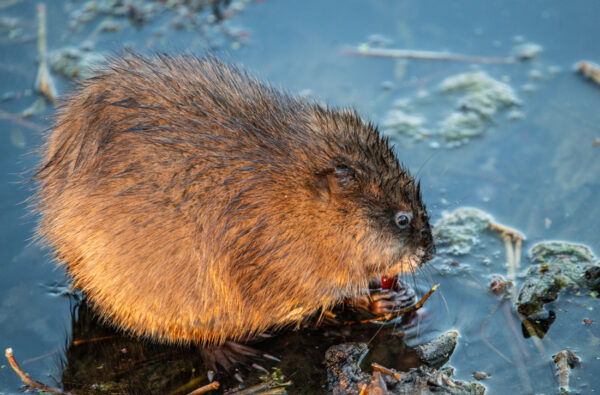
If you take a stroll along the boardwalks at Murfree Spring Wetlands, you’ve probably seen a small, furry shape moving purposefully through the water. While many people visit the spring to see the herons or the turtles, the muskrat (Ondatra zibethicus) is currently one of the most reliable wildlife sightings in the park. On a single walk, it is common to spot several of them, usually completely absorbed in their own daily routine.
The name is a bit of a misnomer; the muskrat isn’t actually a “true rat.” They are semi-aquatic rodents found across most of North America. Most people initially mistake them for beavers, but the “tail-tale” sign is the giveaway. While a beaver’s tail is a wide, flat paddle, the muskrat has a long, thin tail, slicing through the water like a rudder.
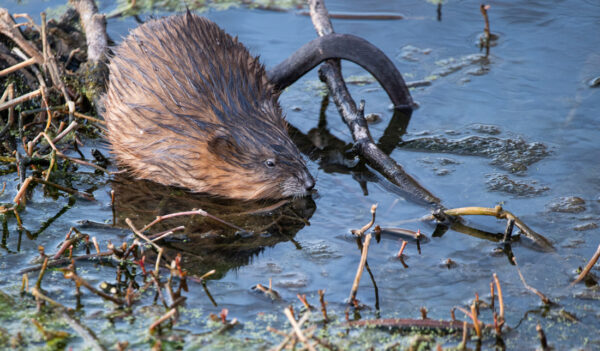
Roughly the size of a small house cat, muskrats move with a focused energy. They aren’t particularly interested in the people watching them from the boardwalk; they rarely look up, preferring to stay dialed into their work.
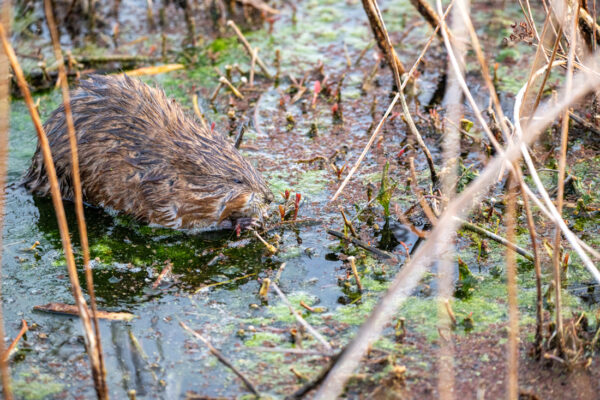
Muskrats are the unofficial gardeners of Murfree Spring. They are primarily vegetarians, munching on the roots, shoots, and stems of aquatic greenery. By grazing on the fast-growing vegetation, they help keep water channels open for the fish, turtles, and water birds that share the habitat.
Photos by Ashleigh Newnes
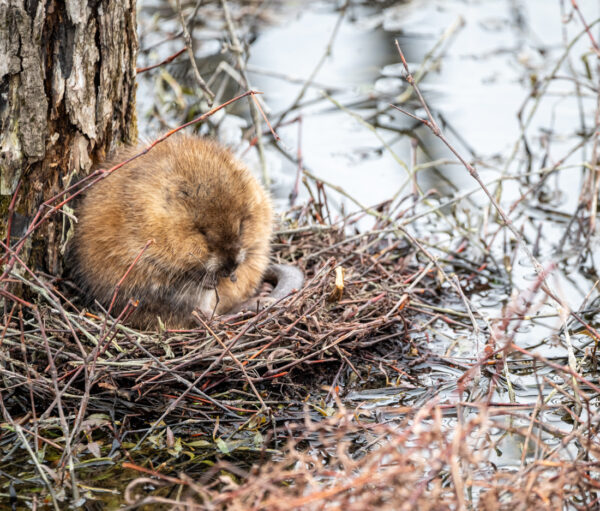
If you look closely at the base of submerged trees or floating logs, you might catch a muskrat taking a break. They often curl up into a small, furry ball to sleep right on top of a patch of matted grass or a sturdy tree root. These aren’t elaborate nests they’ve built; they are just convenient, natural spots where they can catch a midday nap in the sun before getting back to work.
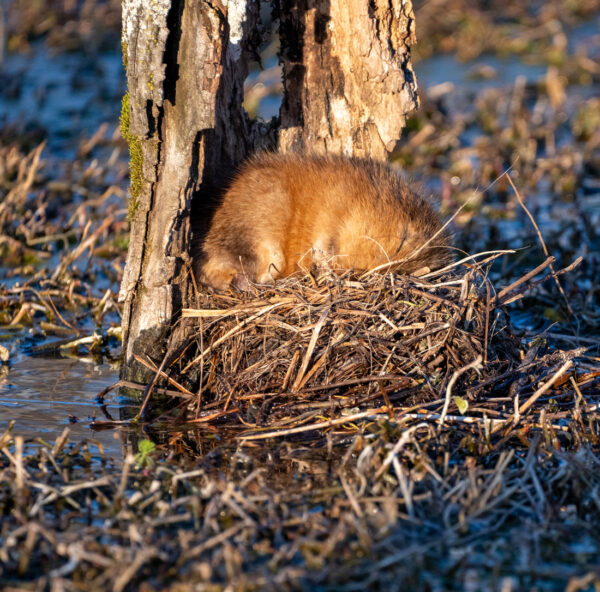
When they aren’t napping on tree stumps, muskrats live in more permanent structures. They are skilled at tunneling into the soft, muddy banks to create burrows with secret, underwater entrances. In more open areas, they might build “lodges”—dome-shaped mounds made of mud and vegetation that look like miniature versions of the beaver dams also found at Murfree Spring.
One reason muskrats are so visible at Murfree Spring is how quickly they reproduce and grow. In our region, they can have between two and four litters a year, with an average of five or six kits per litter. These young grow at an incredible pace, learning to swim at just two weeks old and transitioning to solid food by the third week. While they may stay nearby their parents for some time, they are technically capable of surviving on their own at just one month old. This fast-tracked upbringing means that the population can grow quickly, making the spring feel busy with activity.
Next time you’re walking the boardwalk, pause for a second. You’ll likely see a muskrat surfacing near a patch of greenery or paddling toward a bank. They won’t stop to acknowledge you, but watching their quiet, busy lives is one of the best ways to spend a morning at the spring this time of year.
Murfree Springs is a vital habitat located right inside the heart of the city, which means trash is a constant problem. But it doesn’t have to be! Let’s protect these muskrats and all the other critters who share our city. One way to do that is to help the staff at Outdoor Murfreesboro pick up litter at Murfree Spring and at our other city parks. Visit murfreesborotn.gov/1937 to sign up to volunteer and help keep our city parks beautiful!