

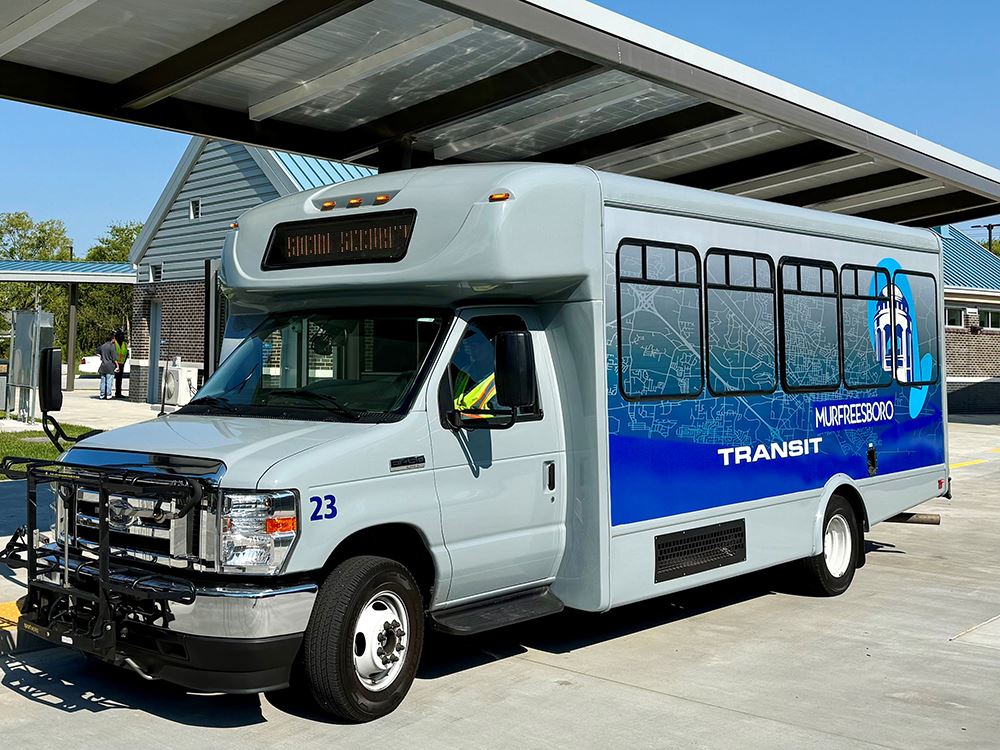
Murfreesboro Transit is preparing route changes, new passenger shelters and a closer connection with regional bus service as officials respond to rider feedback and work to rebuild ridership that has yet to return to pre-pandemic levels.
Russ Brashear, Murfreesboro’s assistant transportation director, said the city has continued adjusting service since operations began at the new transit center a little more than a year ago.
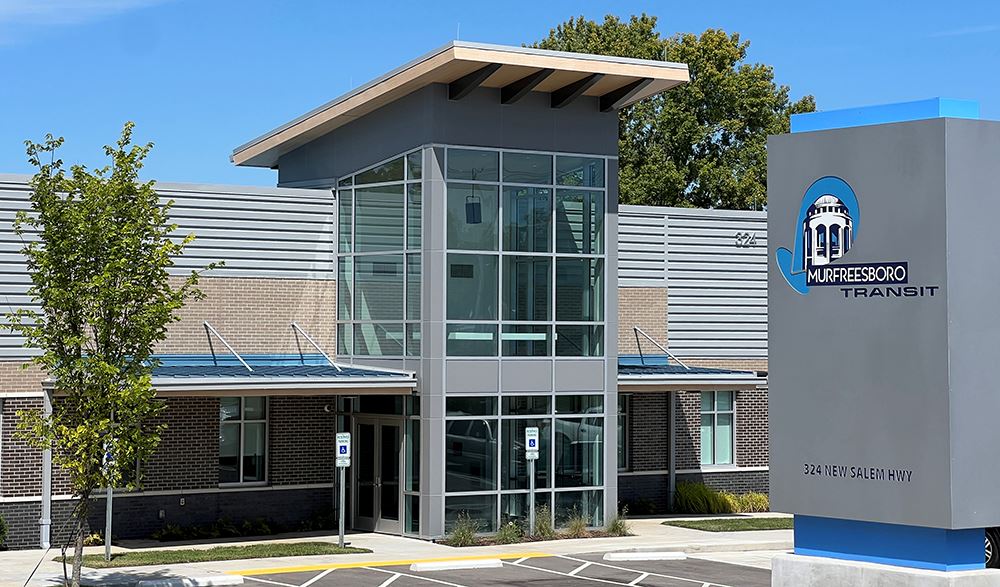
The center, located at 324 New Salem Hwy., serves as the origin and transfer point for the system’s eight routes. Buses generally operate from 6 a.m. to 6 p.m. on weekdays, with limited Saturday service on select routes.
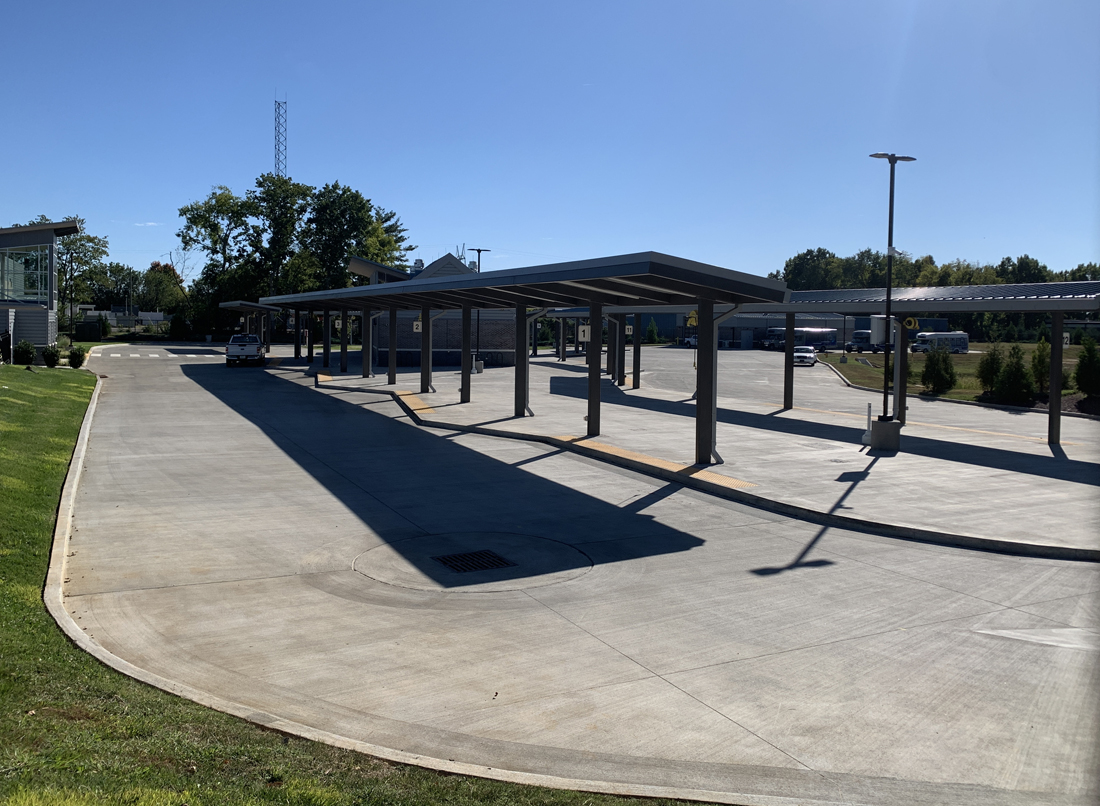
When the center opened, the city modified the longstanding system in which buses arrived and departed at approximately the same time. Officials believed the new, covered (but open-air) facility would allow passengers to wait comfortably between routes, but Brashear said the change was not popular with many riders.
“They liked the old way of how we were doing it, and ultimately we kind of changed back to that,” Brashear said. “Everything comes and goes at the same time now, like it historically did, but it has seemed to make people happier.”
One upcoming adjustment involves a pilot route serving the Cason Lane and St. Andrews Drive corridor. The route currently operates only within that area instead of returning to the transit center, but that will change in November.
Brashear said riders in the area had requested a connection to the center. The change reflects the trial-and-error involved in designing transit service, he said, even after extensive planning.
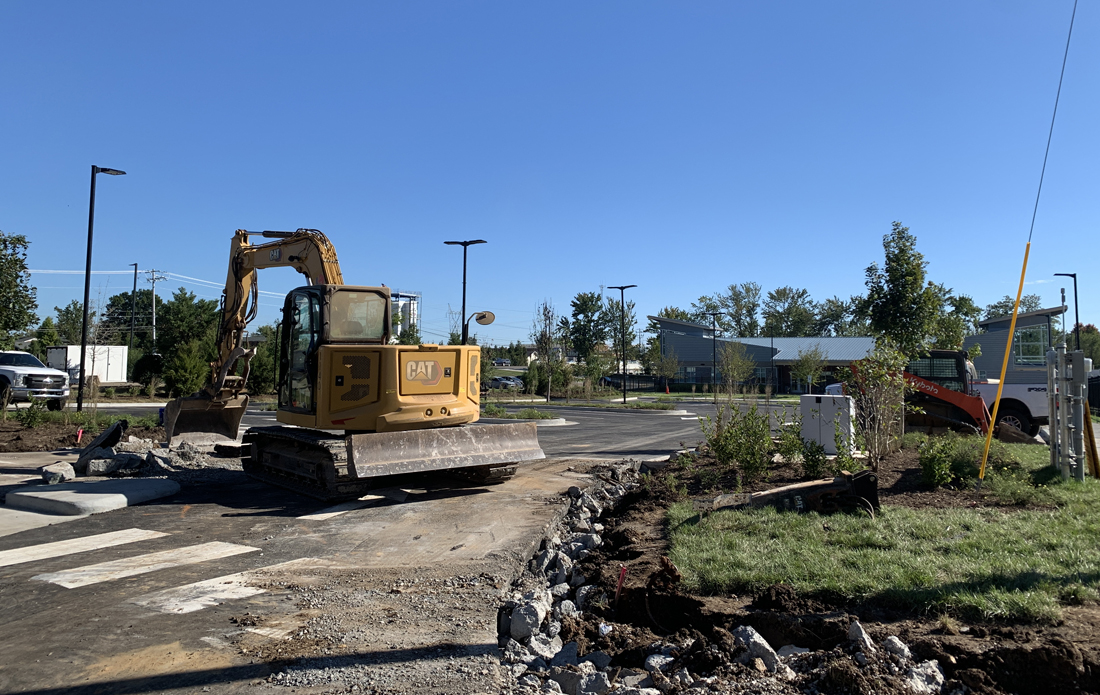
The city is also moving ahead with an ongoing bus shelter project. Brashear said seven new shelters are expected to be installed at various points around Murfreesboro by the end of February, while a shelter on Pitts Lane that was destroyed in a vehicle crash will be replaced.
The city ultimately hopes to install 32 shelters over several years.
Brashear said the shelters should improve the overall passenger experience of using the system.
Regional connections are expanding as well. WeGo buses already travel to the Murfreesboro Transit Center, and the Middle Tennessee agency—which transports Murfreesboro riders to Nashville and other outlying communities—is scheduled to relocate its park-and-ride operation from the area behind Stones River Mall to the center on Oct. 5.
Brashear said a special event marking the park-and-ride opening is planned for Oct. 16.
He said the collaboration, which has been discussed for years, should make it easier for residents to connect with service beyond Murfreesboro. However, he does not expect ridership to increase immediately.
“We expect ridership for both us and WeGo to—not just magically increase overnight—but to gradually increase as more people understand the service and see the benefits of it,” Brashear said.
Local ridership has recently shown signs of improvement. Brashear estimated that summer ridership increased between 10% and 25%, depending on the day and weather. He cited high temperatures, fuel prices and the availability of air-conditioned buses as possible contributing factors.
Even with that growth, ridership remains well below its previous level.
Before COVID-19, the system carried roughly 1,100 to 1,200 passengers per day, Brashear said. A pre-pandemic survey found that approximately 60% of riders used the buses for employment. When workplaces and other destinations shut down during the pandemic, ridership also fell by about 60%.
“On a best day right now, we’re doing 550,” Brashear said. “That’s on a good day, so we’re still not anywhere near where we want to be.”
Rather than simply adding more trips for existing riders, Brashear said his goal is to introduce service capable of reaching new passengers. He hopes to revive a study of microtransit, an on-demand service that could carry residents from areas beyond walking distance of a bus stop to the city’s fixed routes. The study was removed from the current budget, but Brashear plans to seek its inclusion in fiscal year 2028.
The city’s capital improvement plan also includes a proposed purchase of three buses, subject to approval. Brashear said the vehicles could supplement heavily traveled routes at peak times, including the Social Security route, which passes The Journey Home; the Martin Luther King Jr. Boulevard route and, at times, the South Church Street route.
Longer operating hours are another eventual goal. Brashear said service until 9 p.m. could be appropriate for Murfreesboro, though the city has not committed to that expansion.
“There’s always a cost associated with improving services,” he said. “So you just have to find that balance and make it work.”
Currently, the Murfreesboro Transit routes that travel to the Avenue, the Gateway and the Cason Lane/St. Andrews area are “fixed stop” only, meaning the bus stops only at designated locations. However, “all other routes are a combination of fixed stop and flag stop,” Brashear said; riders may hail the bus at most any point along the route, as long as there is a suitable place for the bus to stop. “It has to be a safe location for both the rider and the bus driver . . . we do not pick up in turn lanes and we avoid picking up close to any intersection.”
For more information on Murfreesboro Transit routes and schedules, visit murfreesborotn.gov/248 or access the Murfreesboro Transit app.