

by Josh Bowden
Lil’ Kickers of Murfreesboro
In our last piece, we began this journey of child development by learning how to encourage physical activity through positivity and setting the example as parents. Now, with spring in full swing, let’s discuss the budding exploration of your child’s cognitive development and the impact gained from play and overall physical activity!
Cognitive development theory focuses on how a person’s thinking develops over time and examines how these thought processes shape our understanding of, and interactions with, the world around us. For the sake of brevity and simplicity, here we are going to only explore the first two phases of development, by age, as proposed by physiologist Jean Piaget.
Sensorimotor Stage:
● This stage is from birth to about 2 years old, when babies learn about the world through their senses (seeing, touching, tasting, etc.) and body movements. They mostly react to what they see, hear or feel by using basic actions like grabbing things or turning their heads.
● A few of the thinking and problem-solving milestones at this stage can include: 1) mimicking others they see, both adults and kids, 2) recognition through repetition, and 3) showing curiosity and exploration of new environments.
Pre-Operational Stage:
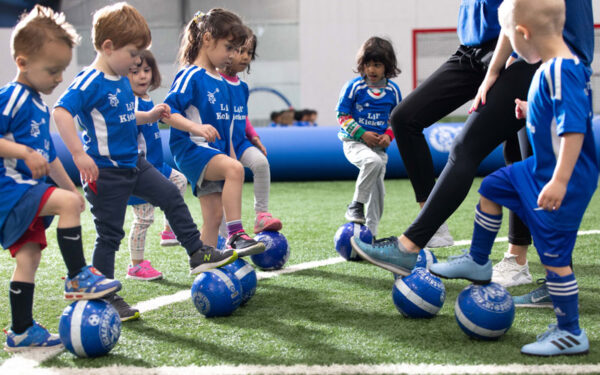
● This is the stage from ages 2 to 7 when kids start learning how to use language. During this time, they haven’t quite grasped logical thinking yet, so they can’t really work with information in their heads and also struggle to see things from someone else’s perspective (this is generally when those “meltdowns” occur, through sheer frustration of not being able to fully communicate what they are feeling.)
● Imagination is everything to them at this stage, like riding a broomstick as if it really is a horse.
● Language development is “the king” of this stage as they begin to expand their brain power to include things like symbolic play (using a pot turned upside down as a drum) and intuitive thought, with which they begin to problem-solve, but cannot typically “show their work” (apologies to my 4th-grade math teacher . . .).
Now that we have tackled Psych 101, let’s dive into some practical how-tos for creating and nurturing the best possible environments for our kids to ensure boundaries are pushed, lessons are learned and milestones are achieved!
News alert: Most kiddos at these stages love to play and be physically active often.
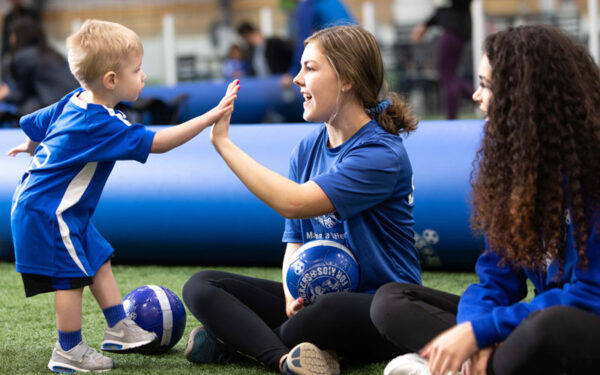
In the sensorimotor stage (0–2 years), the two pillars of focus should be repetition and consistency. For example, make a plan to do the same set of age-appropriate playtime activities at the same time daily or weekly. Wash. Rinse. Repeat. Build confidence by doing it again and again. This can be something as simple as hide-and-seek or playing “Simon Says.”
In the pre-operational stage (2–7 years), encourage children to fully immerse in lots of safe and imaginative play with both structured and unstructured movements. Keep the structured movements fairly simple. This allows us, as parents, to establish boundaries and guidance while the unstructured ones allow for a full array of exploration and growth by tapping into the imaginative spirit that fuels early learning. Some ideas here would be building forts with sheets and pillows, or embarking on a scavenger hunt.
While it is certainly easier said than done, try to remember that the mundane to us as parents is more like magic to your child. All of this helps build a strong foundation for an active lifestyle and forging a growth mindset as they continue to mature.
Remember: strength in numbers. As parents, we’ve got this! We are all our best resources, so please share your own thoughts or questions by dropping us an email at thepulse@thelkm.com. We’d love to hear from you and we’ll be sure to address the topics here for the benefit of the community.