

Have you noticed how quickly some people seem to jump to conclusions without ever asking any questions? It’s like they are anticipating the worst, and sometimes hoping for it to make their own lives seem more relevant or important.
Why does it seem easier to believe the bad stuff than to assume the best? Are people afraid of being let down and want to brace for it by anticipating it, rather than refuting it and looking for the good? I remember a line from the movie Pretty Woman starring Julia Roberts and Richard Gere. The female character commented that if people put you down long enough, you start to believe it. He told her that he thought she was a very bright and special woman. Her reply was “the bad stuff’s easier to believe.” This seems to be a sentiment that is reflected in real life. A lot.
“‘You,’ he said, ‘are a terribly real thing in a terribly false world, and that, I believe, is why you are in so much pain.’” — Alice in Wonderland
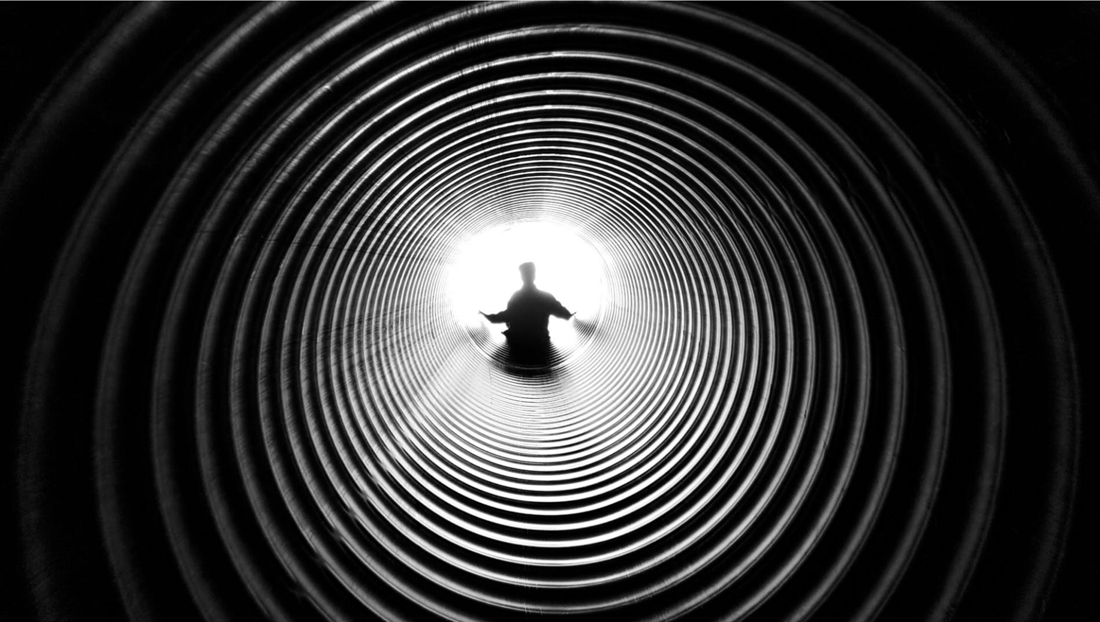
Did you know there is a deep, dark hole with a vortex of strength that can pull you in without you even realizing that it’s happening? It can be so subtle in its approach that you’re halfway down before you notice that things look and feel different. This is also known as the rabbit hole, when you are led down a path that seems endless and sometimes destructive, with no barrier to save you from being swallowed up. Or, even when it appears to be a good thing, if it is complicated and met with one distraction after another with no end in sight, it is a black hole that you have fallen into.
It can start out so innocently. An unexpected life change happens that throws you into a tailspin, scrambling to keep your balance. We all want our lives to have some sense of order, stability and assurance that we are on the right path to feeling secure, protected and, hopefully, happy. Then the car breaks down, the household gets sick, you lose your job, a loved one departs this planet, a special relationship turns sour, your best friend gets divorced, your child is getting married, or you owe more than you anticipated in taxes. Any one of these can get under your skin and pull your time, attention and energy toward trying to fix it and make life seem “normal” again. Or maybe they all happen within a short period of time—that can feel draining.
“If fear paralyzes you, you’re lost.” — The Cheshire Cat
What can you do to avoid the pitfalls of the black hole? Or at least be hyper-aware of where you’re headed, and learn to enjoy the ride? First of all, it is important to establish things that ground you. Rituals are great places to start. These would include actions that are your favorite “go to” to unplug, recharge and see the light that can lead you back to a centered space. However, even with healthy habits and rituals we find ourselves deep in the well and unsure how to get out at times.
Many years ago, a friend of mine was sharing about some difficulties happening in his marriage. He often remarked on how I was a positive source of optimism and spiritual support to him. He made the comment “I pray you never become cynical. It’s a horrible way to live.” For some strange reason that statement stuck with me. At the time, I reflected on my life experiences to that point and felt extremely grateful that he, and others saw me as a source of light in their lives. I also thought I could never imagine becoming cynical.
“If it’s out of your hands, it deserves freedom from your mind, too.” — Ivan Guru
Fast forward, many years and many of life’s curveballs later, I had noticed a shift in myself and saw how I was more often than not seeing the “what if” and gloomy side of circumstances. This came on very subtly and was barely noticeable, mostly because I quickly replaced my negative thinking with more proactive and positive ways of dealing with said situations. And lo, many times my friend’s comment “I pray you never become cynical” would pop into my head.
Again, I thought that would never be me. However, I had noticed that I was feeling more edgy about life (due to challenges that take time and attention and put you in the “spin” cycle). I was driving and came up behind someone who wasn’t driving like I thought they should be. Though alone in my car, I spoke aloud, “Really?! You’re going to go that slow when you’re in the lane to turn and move on?” Then the voice appeared in my head—I pray you never become cynical. Whoa! Where did those negative thoughts come from? Mind you, this was a very small example of how subtly the negative can creep in, but I became hyper-aware how easy it was to gravitate to it in that moment. I also realized it had trickled down from bigger issues to something as silly and small as traffic. My friend’s comment filled my head and I remembered I had a choice how to think about any situation. I wish to never be what people refer to as cynical or negative. Not in my DNA.
“May you never forget what is worth remembering, nor ever remember what is best forgotten.” — Irish Blessing
How wonderful that just as subtly we can have one phrase or thought that keeps bringing us back to a better way of thinking and being: offering the benefit of the doubt, or seeing the opposite side of a negative thought in order to have a more uplifting and positive outlook. It is an active practice. A choice you make to lean toward the light—and not toward the darkness of the deep, black hole.