

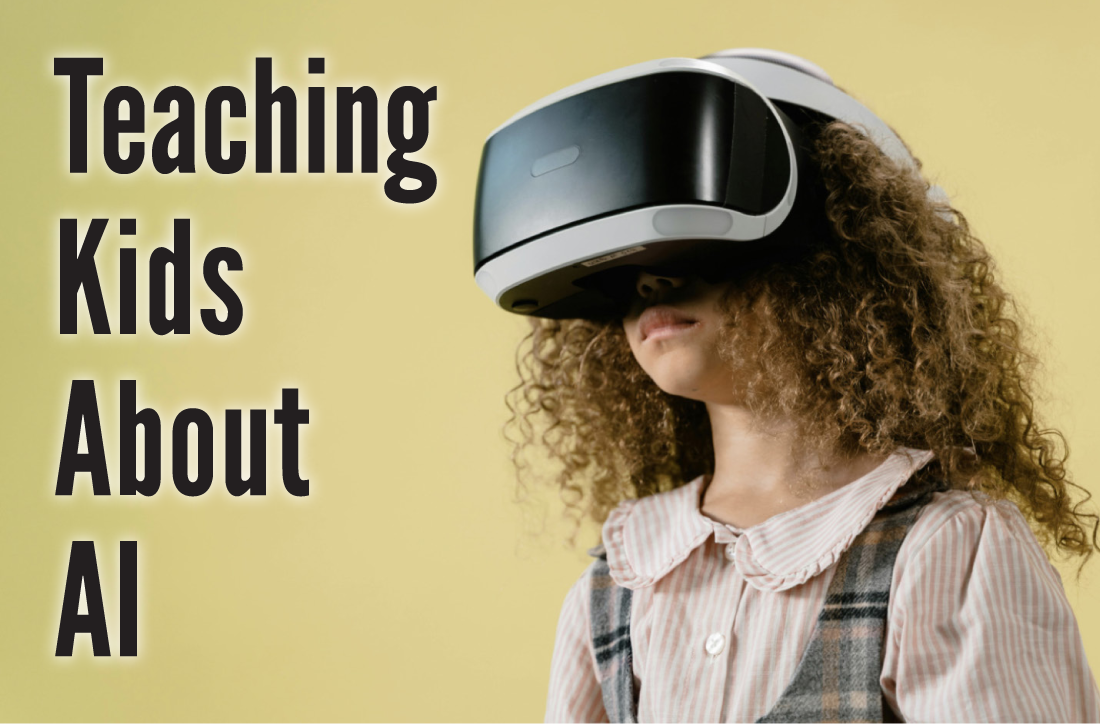
Recently, a nurse and mother told me her biggest concern about kids and artificial intelligence wasn’t homework cheating, it was mental health. As I started researching, I realized she had a valid point: most parents are just beginning to understand the impact AI is having not only on their jobs but also in their homes.
Here’s the reality: Your kids are probably already using AI in some way.
The question isn’t whether to allow AI in their lives; that ship has sailed. The question is how to teach them to use it responsibly, to guide them in navigating the world in the AI age.
Some parents may even say “Oh, we don’t allow AI in our house.” Don’t be deceived. AI is working its way into unsuspecting people’s lives in various ways.
Smart TVs keep track of what we watch, and game consoles notice how we play. AI also chooses which posts get more attention and which creators become popular.
I use Waze to get traffic predictions and find better routes. When you search for nearby businesses, AI decides which options show up for you.
Would you let your insurance company track you if it meant paying less for your bill? For many, they already do that.
I once heard someone say, “Most households aren’t AI-free. They’re AI-unaware.”
Understand How Your Kids Are Using AI
Students are using ChatGPT, Claude and other tools for homework help, making videos and creating music. Some use it to check their work, get explanations of complex concepts, or complete a full assignment. Others use it to bully others, creating “deepfakes” of classmates or use voice cloning and video editing to target other children.
Your child, niece, nephew or neighbor might be using Character.AI to chat with AI versions of fictional characters or to create AI companions they talk to daily. Your high schooler could be using AI art generators for school projects. Even Snapchat has “My AI” built directly into the app.
Recognize the Mental Health Risks That Matter Far More Than Homework Shortcuts
This is what concerns me: kids are forming emotional relationships with AI chatbots and turning to them for mental health support.
Character.AI lets kids create AI companions. Snapchat’s My AI responds like a friend. And increasingly, kids are confiding in these chatbots about anxiety, depression, loneliness and problems at home or school. It makes sense why: AI never judges, it’s always available at 2 a.m. when you can’t sleep, and it often tells you what you want to hear. For a struggling teenager, that can feel like a lifeline.
The stakes are real.
Multiple families have sued Character.AI after teenagers died by suicide following intense relationships with chatbots. The company has since banned users under 18, but these cases highlight why parents need to understand what’s happening on their kids’ devices.
Here’s the problem: AI does offer sympathetic responses.
When a lonely middle schooler finds it easier to talk to AI than to peers, or when a teenager seeks emotional support from a chatbot instead of trusted adults, it’s not just about missing out on genuine relationships, it’s about kids not getting the help they need.
Start the Conversation Without Creating Defensiveness
Start by asking your child to show you what they’re using AI for. Let them be the expert. You’ll accomplish two things: you’ll learn what they’re doing, and you’ll open a conversation where they’re not immediately defensive.
Ask questions without judgment. Do they talk to AI chatbots? About what? Listen to their answers. If your child feels more comfortable opening up to AI than to you, that’s valuable information about your relationship that’s worth examining.
Set clear expectations together. “AI can be interesting to interact with, but it’s not a substitute for real friends, family or professional help.”
The Bottom Line
Your approach should adjust to your child’s age. AI is a tool. It can help with work assignments, answer questions and even be entertaining. But it can’t replace real human relationships.
Our job as parents is to teach kids to use AI wisely, maintain real-life bonds, and know when to seek real help for real problems.
I recall the first time my dad gave me the car keys. He equated the car to a “gun” and how I had to be careful when operating it. Today, that conversation has evolved to include AI.
Welcome to parenting in 2026.