

Tucked away in the wild and rugged land between McMinnville and Sparta, the massive Scott’s Gulf Wilderness State Park sits not far away from other popular Tennessee State Parks Rock Island and Fall Creek Falls.
The 9,500 acres of this huge park contain lots of various points of interest, accessible by multiple entrance points and trailheads, including a long trek to Virgin Falls and other areas scattered around the far reaches of the backcountry. But one of its fascinating features, Lost Creek Falls, is one of its most approachable.
Entering from McMinnville via Hickory Valley Road and Big Bottom Road sets the tone for the remote park.
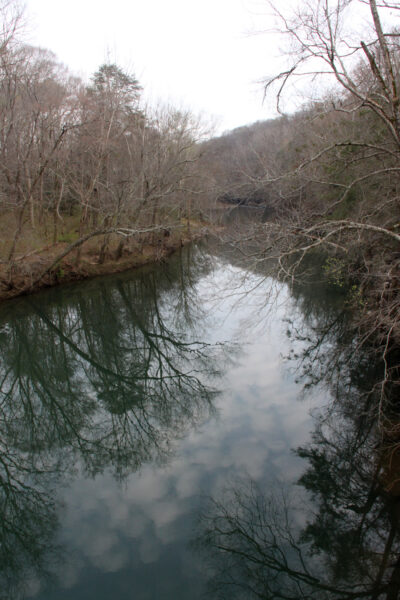
Shortly after a scenic bridge crossing over the Caney Fork River, the winding country road enters the park land and transitions into a dusty, gravel stretch that feels increasingly isolated, even in comparison to the surrounding expansive cow country of White County, Tennessee.
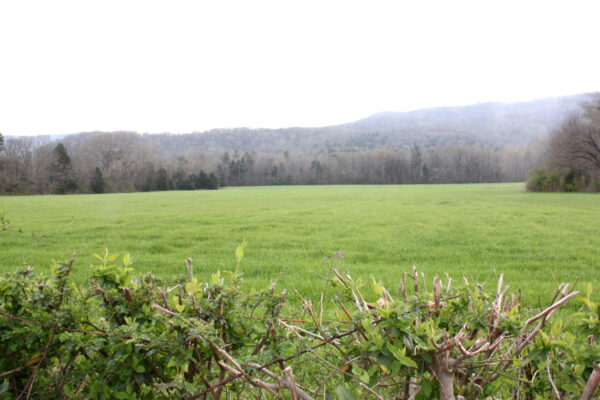
Vehicles first pass by the Centennial Wilderness Wildlife Management Area—Big Bottom Unit. The Rylander Trailhead provides access to the Rylander Cascades, Dry Creek Falls, Meditation Rock, and—nearly four miles away—the impressive Virgin Falls.
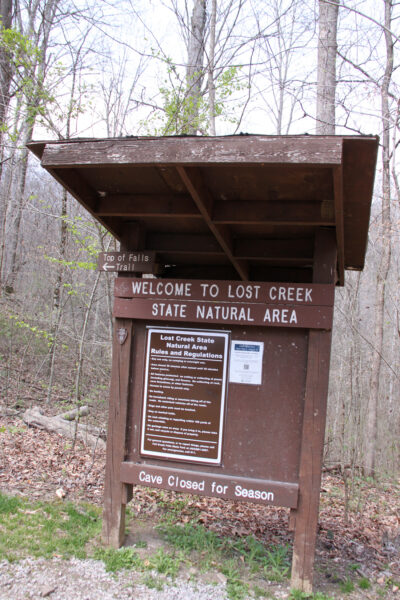
But passing this area (when approaching from the south) soon leads to another parking area for Lost Creek Falls.
Just after stepping out of the car here, explorers can already hear the crashing water echoing off of the rocky basin, somewhere just out of sight. But this beautiful waterfall doesn’t require a long trek to reach it.
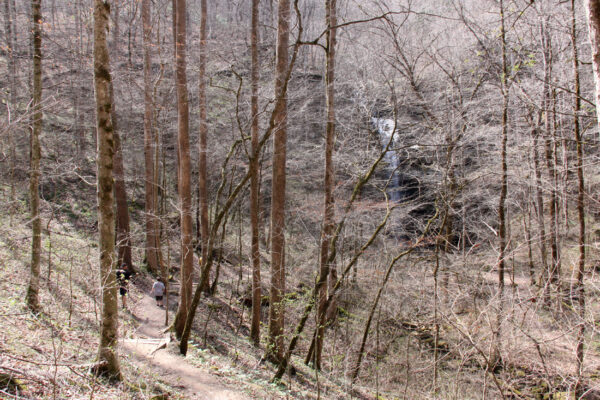
Trail options lead below and above the falls. And both are short. Tennessee State Park maps list the Lost Creek Falls Trail, the one that goes down to the base, as two-tenths of a mile, though that distance includes a small loop once it already reaches the bottom of the hill and base of the falls.
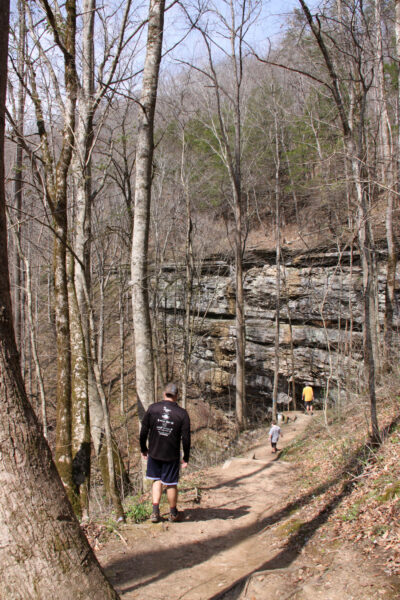
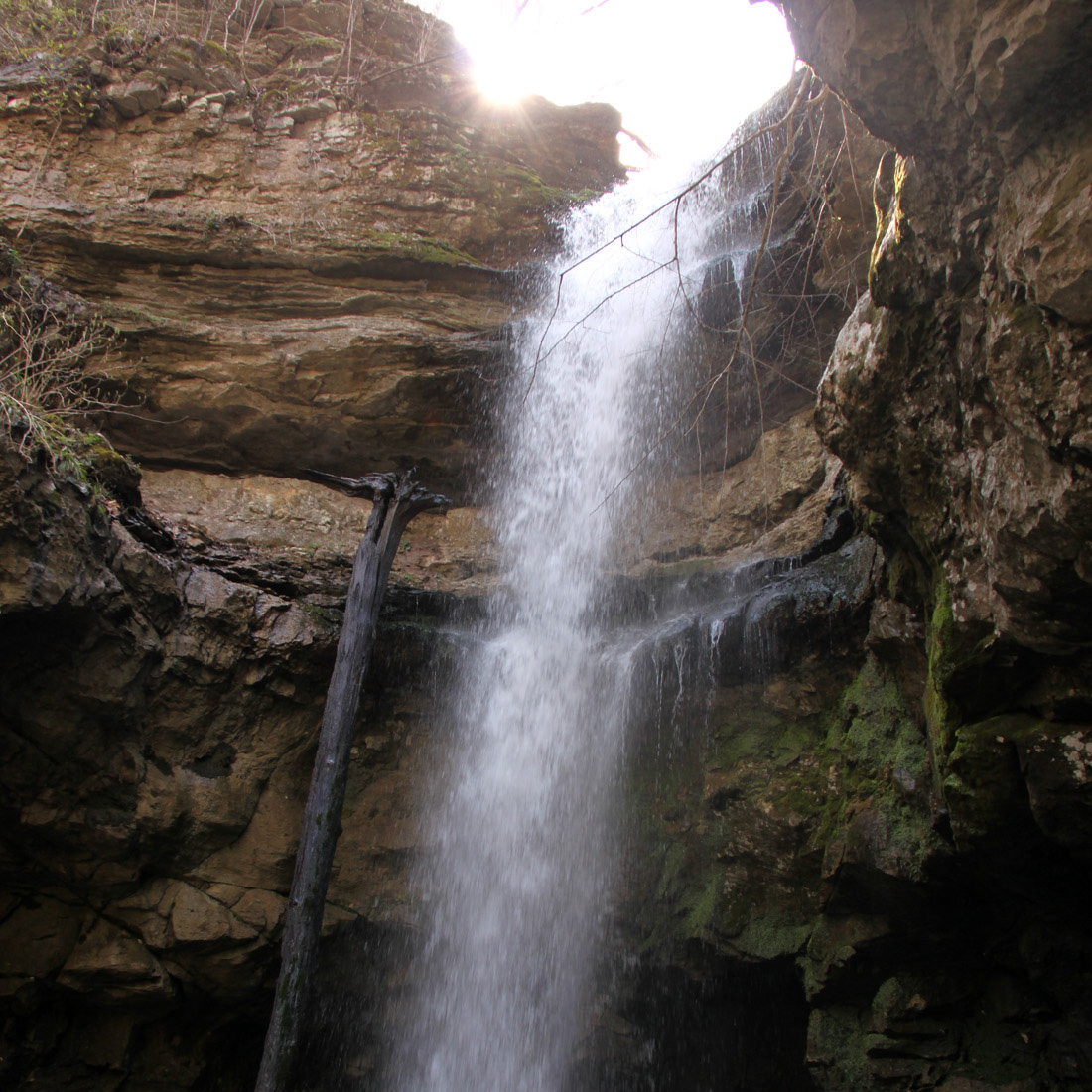
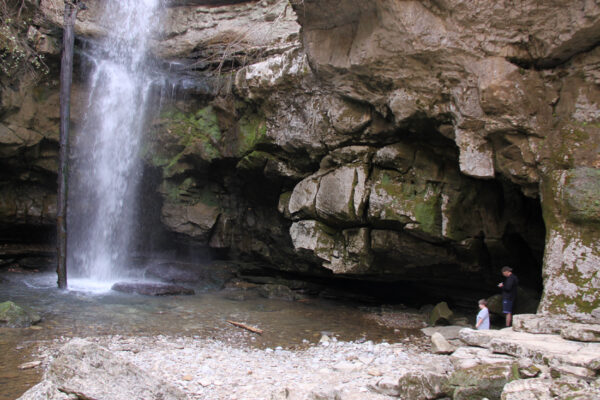
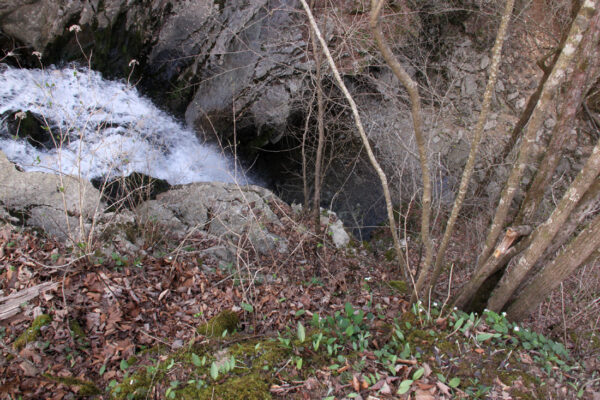
Descending, a short walk reveals a massive rock face with a large cave opening gaping wide, greeting visitors as they make their way to the lower portion. After curving around, they can now see Lost Creek Falls.
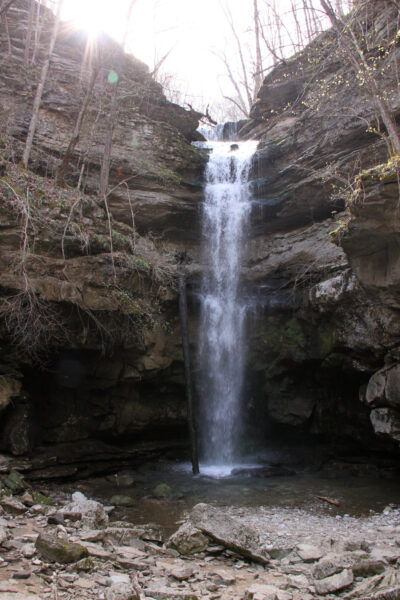
Closer to the base of the 40-foot-tall falls, cool cave air hits those approaching, a steady breath of underground temperature.
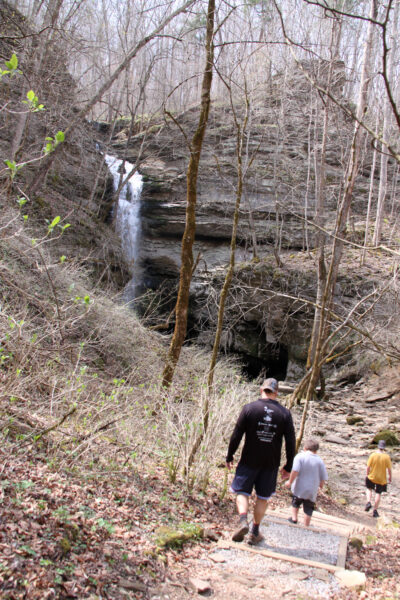
The water tumbles down powerfully, splashing into a small, rocky pool below. It’s quite loud down there with the water crashing on the rocks.
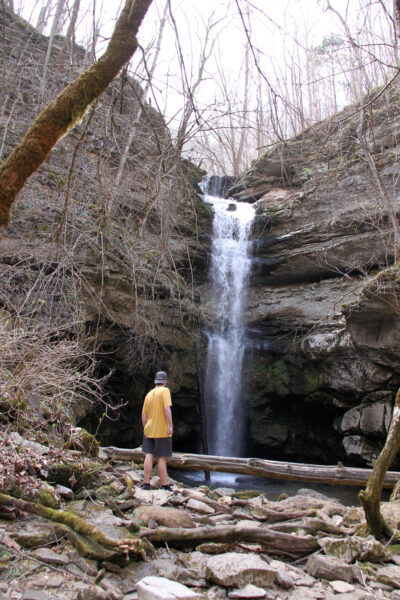
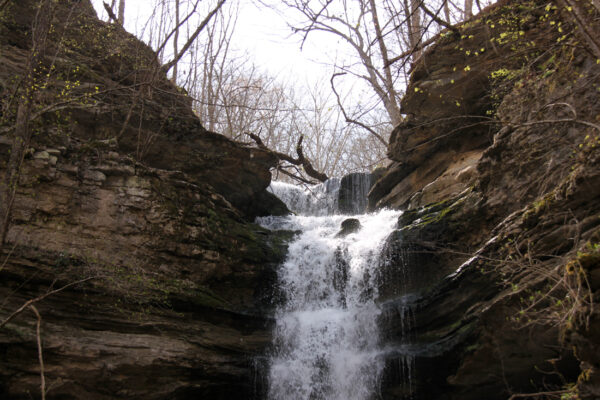
But where the water flows next sets this point apart from many other Tennessee waterfalls—the creek doesn’t continue downstream in the usual sense. Instead, it gets lost! The water slides directly into a cave opening at the base of the falls and disappears underground.
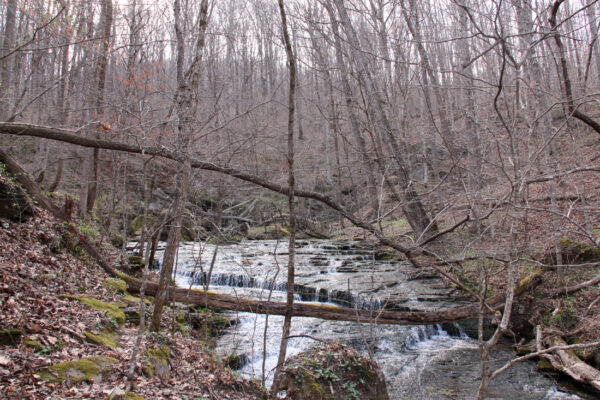
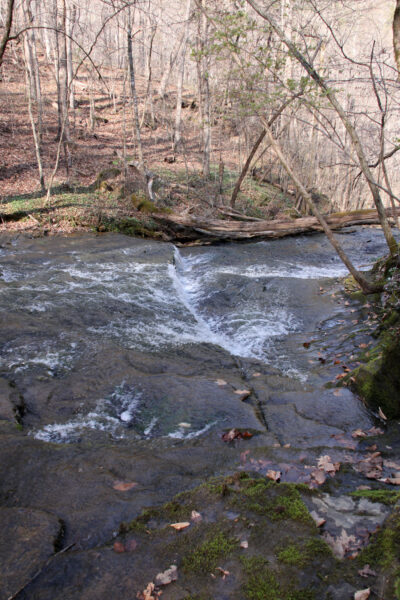
Climbing back up to the top of the waterfall a whole second layer of exploration opens up. Even above the falling point of the main falls, the creek spreads out into a broad, lively cascade, tumbling down the rocky slope before plunging over the edge.
Photos by Sarah Mayo / The Murfreesboro Pulse
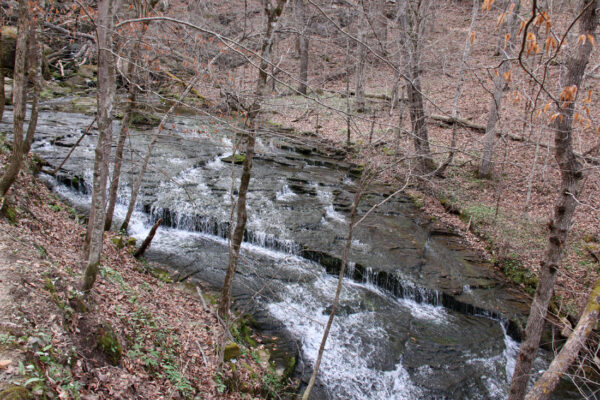
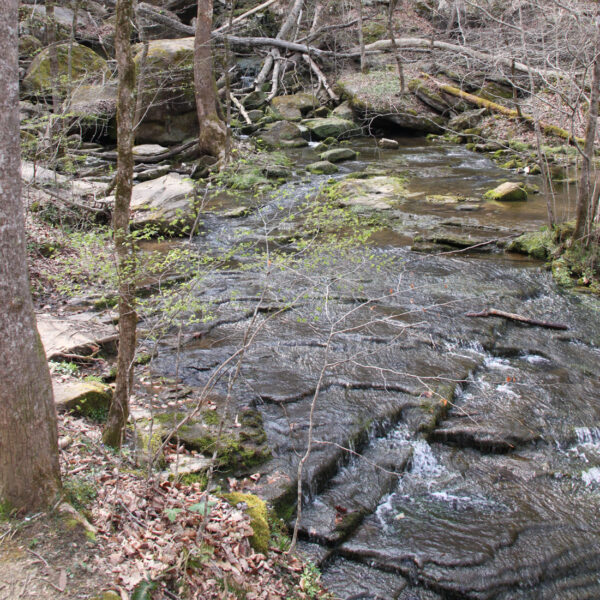
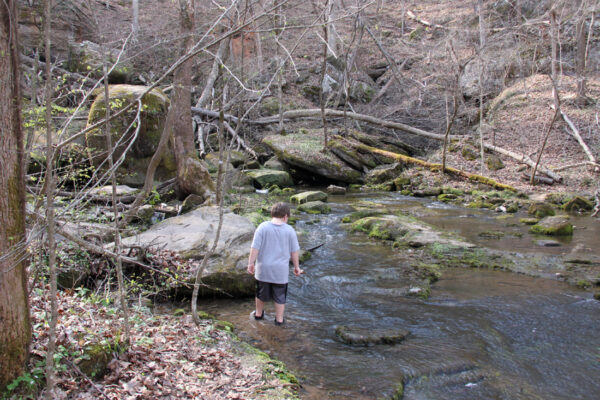
Sitting here, a bit upstream from the falls, is quite serene.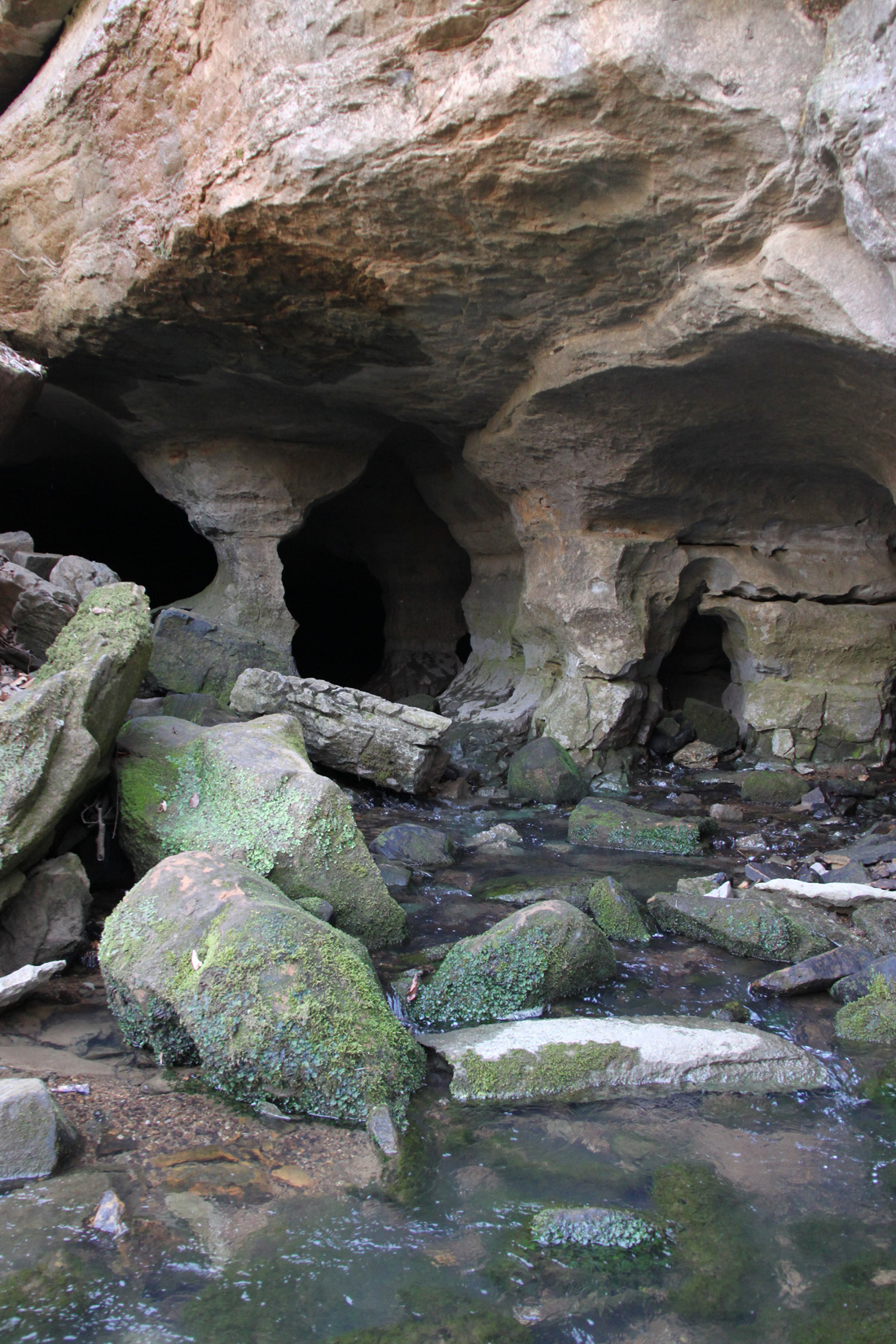
Those willing to venture a bit farther up still get to see another remarkable reward. Getting to the origin point of this section of creek requires climbing up a few large boulders, it’s not for everyone, but there’s another beautiful cave feature up top.
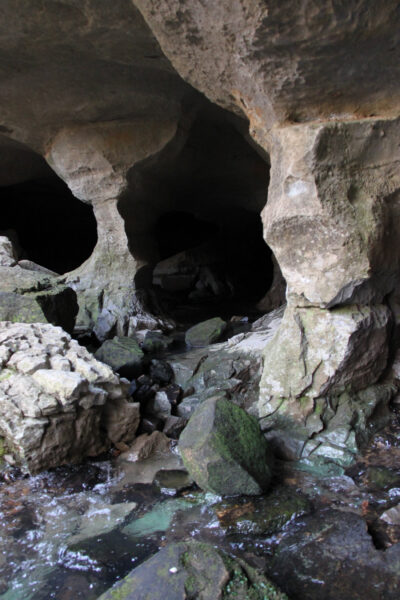
Cave Photos by Bracken Mayo / The Murfreesboro Pulse
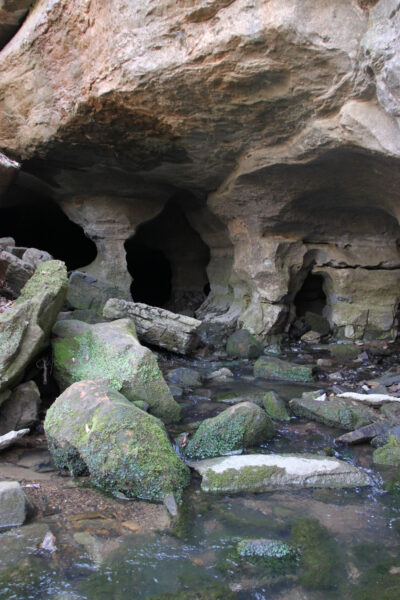
A small cave opening containing multiple natural archways sits up there, where the creek emerges from the darkness within before beginning its journey downward. Incredible—a magical entrance into daylight for Lost Creek.
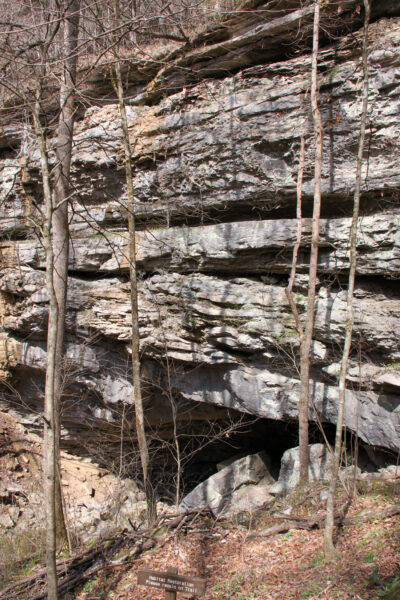
The large cave down in the basin, Lost Creek Cave, unlike many caves on Tennessee State Park land, is open to visitors who would like to explore it. Cavers must apply for a (free) permit, though, and these are available May 1 through Aug. 31 only.
“Lost Creek Cave is one of the larger caves in Tennessee, with five entrances, and seven miles of mapped passages,” according to the Tennessee Department of Environment and Conservation.
Register for a cave exploring permit here.
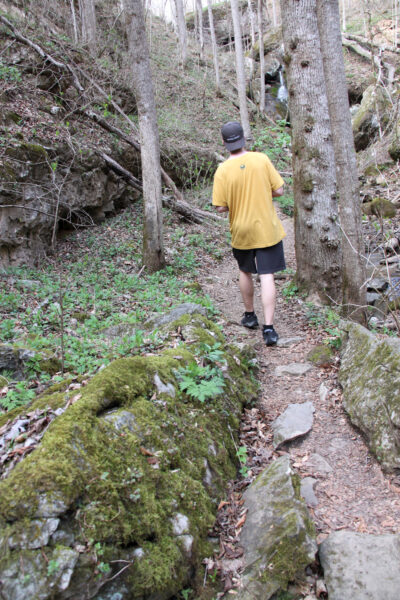
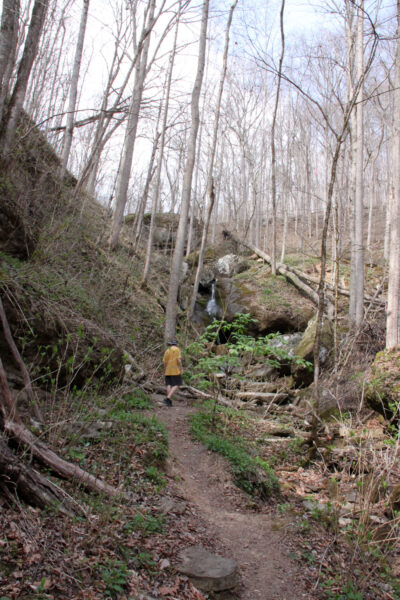
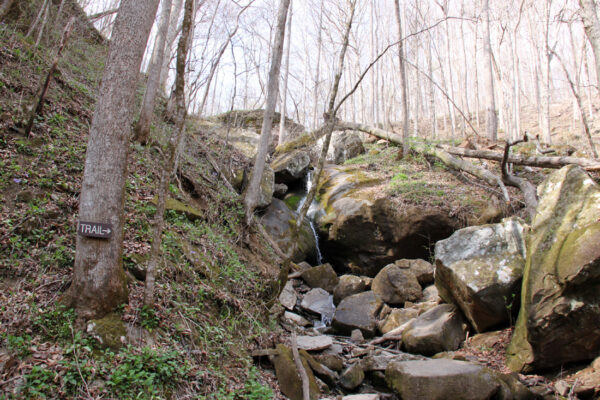

These features are just small pieces of the Scott’s Gulf Wilderness State Park, which spans miles of deep gorges, sandstone bluffs and remote trails. It contains numerous old homesteads, overlooks, arches, and a wealth of interesting elements available to visitors; additionally, the state has set aside huge other swaths of land within Scott’s Gulf Wilderness as wildlife management areas and nature conservancies, not open to the public.
Those looking to move more can spend days walking the more than 30 miles of trails within Scott’s Gulf and truly go off the grid for a while.
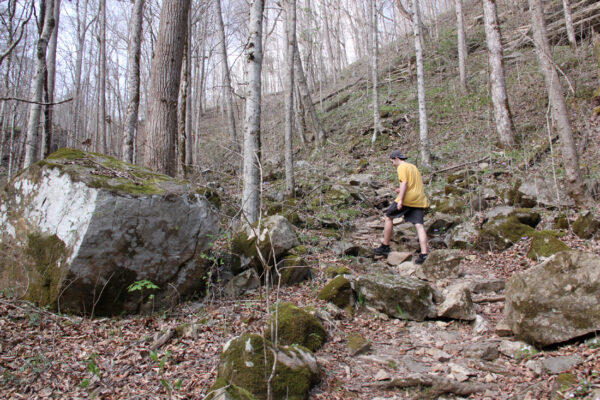
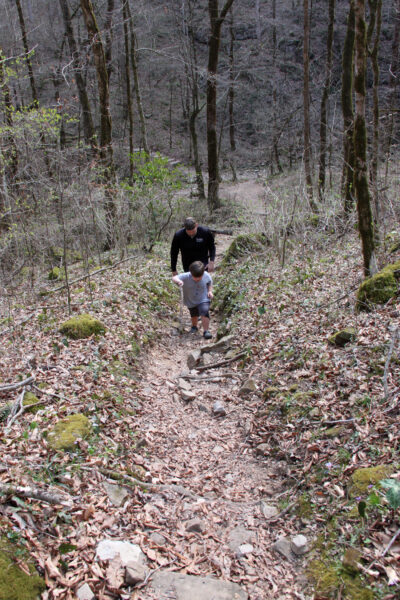
But the Lost Creek area in itself, though just a fractional sliver of the Scott’s Gulf area as a whole, is worth spending good piece of a day exploring. Another part of what makes Lost Creek Falls special—it offers a taste of remote wilderness without requiring an all-day hike, which can mean time to slow down, watch the creek flow, look at the plants, explore the nooks and crags of the cave entrances, and have some moments of quiet and calm without rushing.
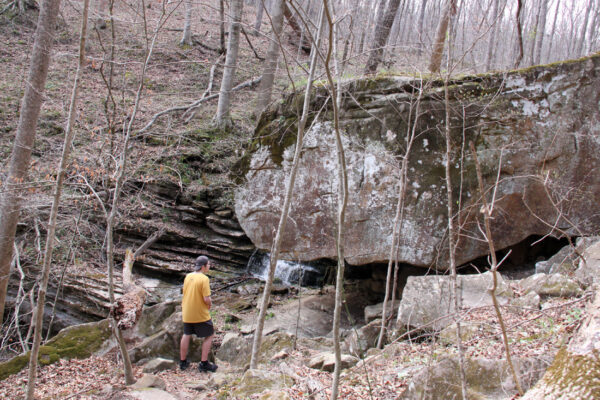
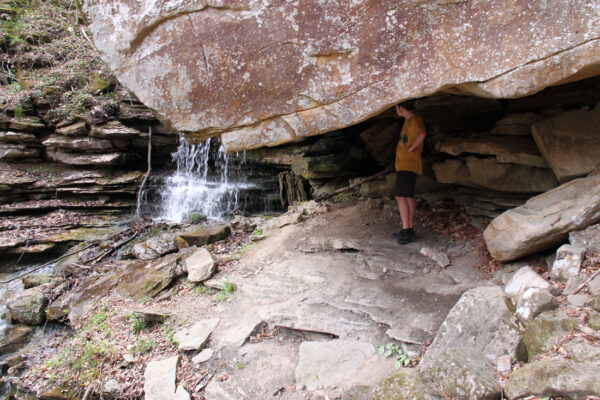
The proximity of the falls to the parking area makes it an accessible introduction for first-time hikers and those who can’t cover long distances.
A trip to Scott’s Gulf could certainly include a extensive, exhausting escapade hitting a whole list of impressive points scattered throughout the gulf’s steep terrain, but for many, a trip to the Lost Creek Falls area is quite enough for one day.
It’s an impressive place, one where water doesn’t just flow, it disappears, and—like the wealth of Tennessee’s other scenery—is waiting and available to anyone willing to get out and explore.
IF YOU GO:
Lost Creek Trailhead
3990 White’s Cave Rd., Sparta