

Part 2 of an ongoing series on data centers, energy, and the AI build-out in Middle Tennessee
There are two kinds of dishwashers in this world. One person fills the sink, lets the dishes soak, and uses the same water from start to finish. The other turns the tap on and lets it run, rinsing every dish in fresh water, and only turns the water off when the last fork is clean. Same dishes. Same outcome. Different amounts of water used.
By the end of this column, you’ll have a better idea why and how data centers use water.
Why a Data Center Uses Water
Computers generate heat. When you put a lot of computers in one building, that heat adds up. Fast. If it isn’t removed quickly, the chips inside can slow down or even fail. Water is better than air at carrying heat, which is why most big data centers use water in their cooling systems. However, the real question isn’t whether or not they use water, but how they use it.
Approach One: Let It Evaporate
Most large American data centers use evaporative cooling. Water from inside the building goes through a cooling tower, and some of it evaporates. Like sweat cooling your skin, this evaporation removes heat, and the cooled water goes back into the building. This method cools well and doesn’t use much electricity. The downside is that the majority of the water leaves as vapor. In hot places like Northern Virginia or Phoenix, a big data center can use several million gallons of water per day.
It’s important to be clear about what “uses” means here. Most household water is used for a short time, then sent to a treatment plant, cleaned, and returned to the local river or groundwater. That water keeps cycling. But water that goes through a cooling tower leaves the area as vapor and condenses somewhere else. So, when you see “gallons-per-day” numbers, they mean something different for an evaporative data center than for a home.
What does all this mean for people paying their water bills? Usually, the effects are indirect. When a utility gets a big new customer, it often must expand its capacity: more intake, more treatment, more storage. And those costs are usually shared by everyone who uses the utility, including homeowners. The water source can also be used up faster than it refills, which can affect water pressure, well depth, and how often the utility needs to drill or build new systems.
Most people won’t notice a sudden change in their tap water, but they might see higher bills over time.
Approach Two: Keep the Water Inside
Think about the refrigerator in your kitchen. There’s a fluid inside the coils on the back, but you never have to refill it. It stays sealed, cycling repeatedly, taking heat out of the fridge and releasing it into the room. A closed-loop data center works the same way, just on a much bigger scale. Water is sealed inside pipes that connect the computer chips to large heat exchangers outside. The hot water releases heat, the outdoor air cools it, and the water cycles back inside. The system doesn’t need to be refilled.
A modern closed-loop facility uses around 22,000 gallons of water a day, about the same amount 65 average homes use in a day. An older facility of the same size, using evaporative cooling, would consume nearly 5 million gallons per day.
What About Drinking Water?
For most Tennessee residents, the answer is reassuring, with one important exception. If your water comes from a public utility, it’s regulated under the federal Safe Drinking Water Act. The utility must test continuously, treat in accordance with federal standards, and notify customers if anything fails. About 90% of Tennesseans get their water this way. Most of our local water comes from a treated surface-water source: the East Fork of the Stones River at J. Percy Priest Lake. A data center nearby doesn’t change those regulatory obligations. The water at your kitchen sink will be the same as before, treated to the same standards.
There is, however, one exception. People who use private wells—which are concentrated in rural areas—get their water from a well instead of a public utility. Private wells aren’t covered by the Safe Drinking Water Act, so the homeowner is responsible for making sure the water is safe. That’s what happened in Morgan County, Georgia: those residents use private wells, and some believe that the data-center construction blasting affected groundwater in ways their systems couldn’t handle. After the viral photo of Congresswoman Alexandria Ocasio-Cortez holding jars of brown well water from Morgan County, the Environmental Protection Agency is looking into what happened.
Anyone who lives near any planned industrial site, not just a data center, should ask about blasting and groundwater protection during construction.
Reading the News With This in Mind
In early June, the Nashville Metro Council voted to move forward with an ordinance declaring a “temporary moratorium” on new data center permits, a step other municipalities have also taken to let zoning rules catch up.
Some data centers fill the sink. Some let the tap run. The difference is bigger than the headlines have let on. That’s the goal of this series: not to tell you what to think about data centers, but to give you information to make sense of them.
Next month, Part 3: The Power Question. I’ll look at what TVA is dealing with as data center demand grows.
___
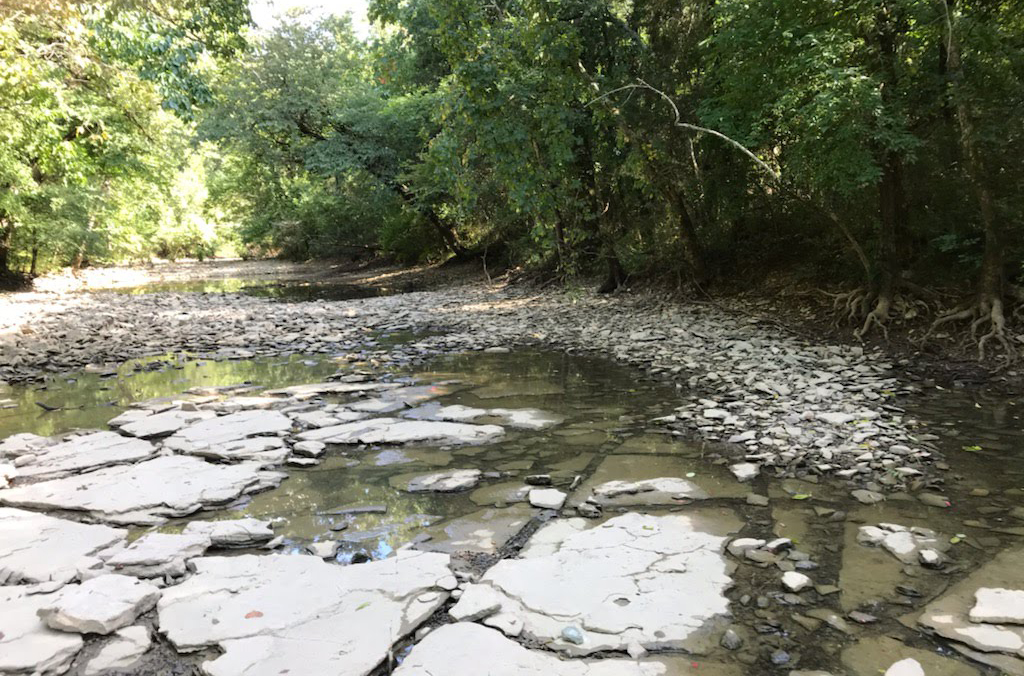
Photo, top, Stones River at Barfield Crescent Park by Bracken Mayo