
We are lucky to call Middle Tennessee home for many reasons, but there is one unique feature that many people may not even realize is here. Right beneath our feet, scattered throughout Rutherford County and surrounding counties, lies an ecosystem so rare and specific that it supports plants found nowhere else on the planet: Tennessee’s limestone cedar glades.
The rocky, barren stretches of land might look harsh at first glance, but they are actually fragile ecosystems teeming with specialized life. In fact, there are certain plants that are so uniquely tied to our local soil that if they vanish from these specific glades, they vanish from the Earth entirely.
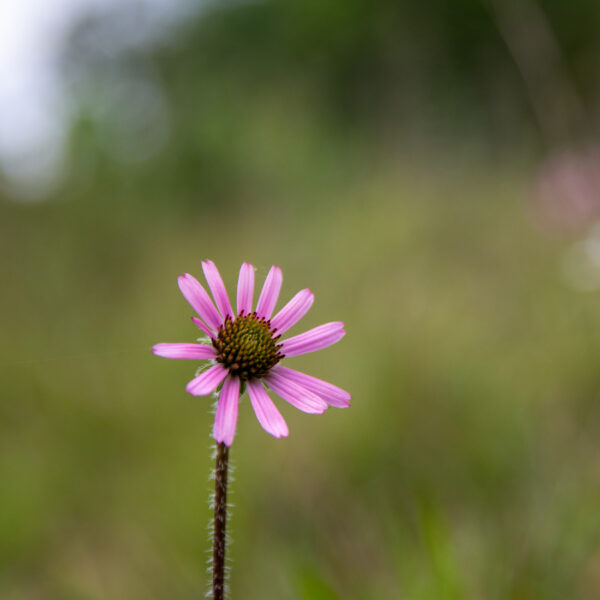
Photos by Ashleigh Newnes
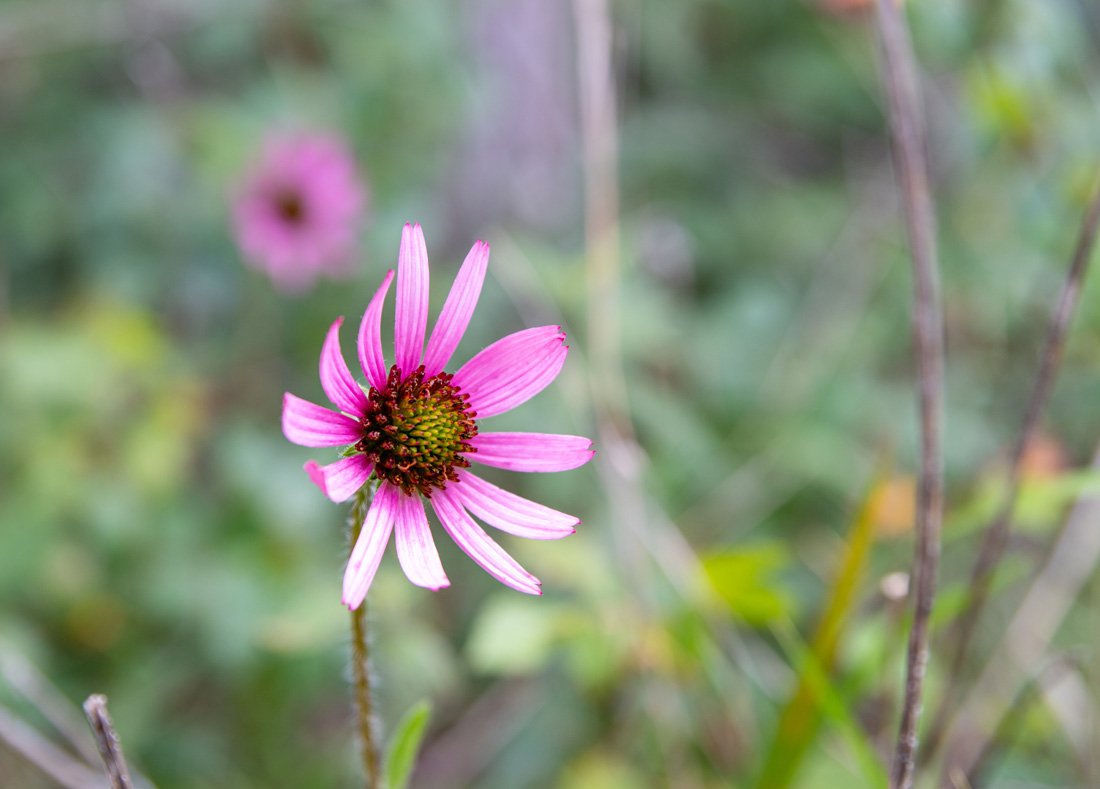
The crown jewel of these rare spaces is Echinacea tennesseensis, better known to most of us as the Tennessee Coneflower.
Most of us are familiar with the standard purple coneflower (Echinacea purpurea) that decorates backyard gardens, but our native Tennessee version has a unique story that sets it apart. What makes this plant truly special is its connection to our home. Because it is entirely endemic to our region, it is a piece of our local history that is uniquely tied to this specific rocky terrain.
The coneflower has a remarkable history. Back in 1979, it was added to the Federal Endangered Species List because it was dangerously close to vanishing forever.
However, thanks to decades of local conservation efforts and the protection of our cedar glades, the flower made a steady recovery. In 2011, it was officially delisted, a rare success story for local conservation.
These wildflowers thrive in the baking hot summer sun on the bare rock conditions that would kill most other plants.
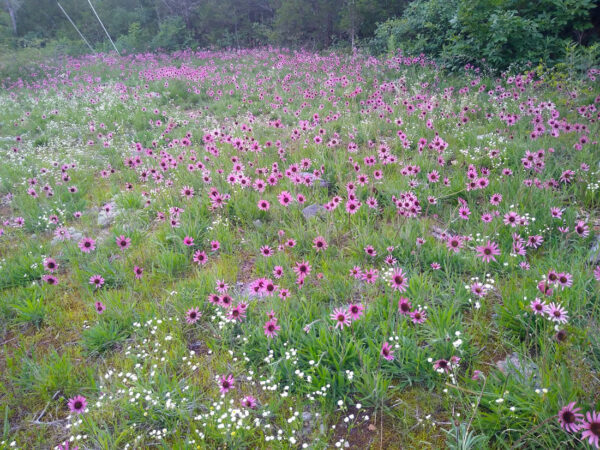
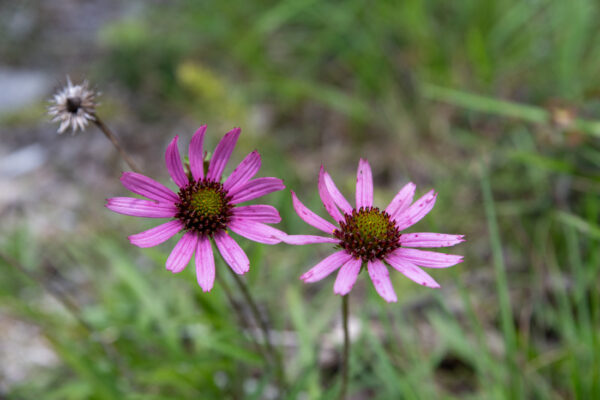
Coneflowers at Long Hunter’s Bryant Grove Recreation Area by Jason Allen
Right now (in July), they are blooming and will continue through August. If you want to see them in their element, your best bet is to head over to the Couchville Cedar Glade State Natural Area, which sits right along the eastern boundary of Long Hunter State Park. It protects one of the largest and best-quality populations of the flower anywhere. Coneflowers also grow at Flat Rock Cedar Glades and Barrens State Natural Area and Cedars of Lebanon State Park.
Next time you are out exploring, keep your eyes peeled for it. Some of the rarest plants in the world don’t require a long journey to find, they are right here in our own backyard, growing against the odds.