
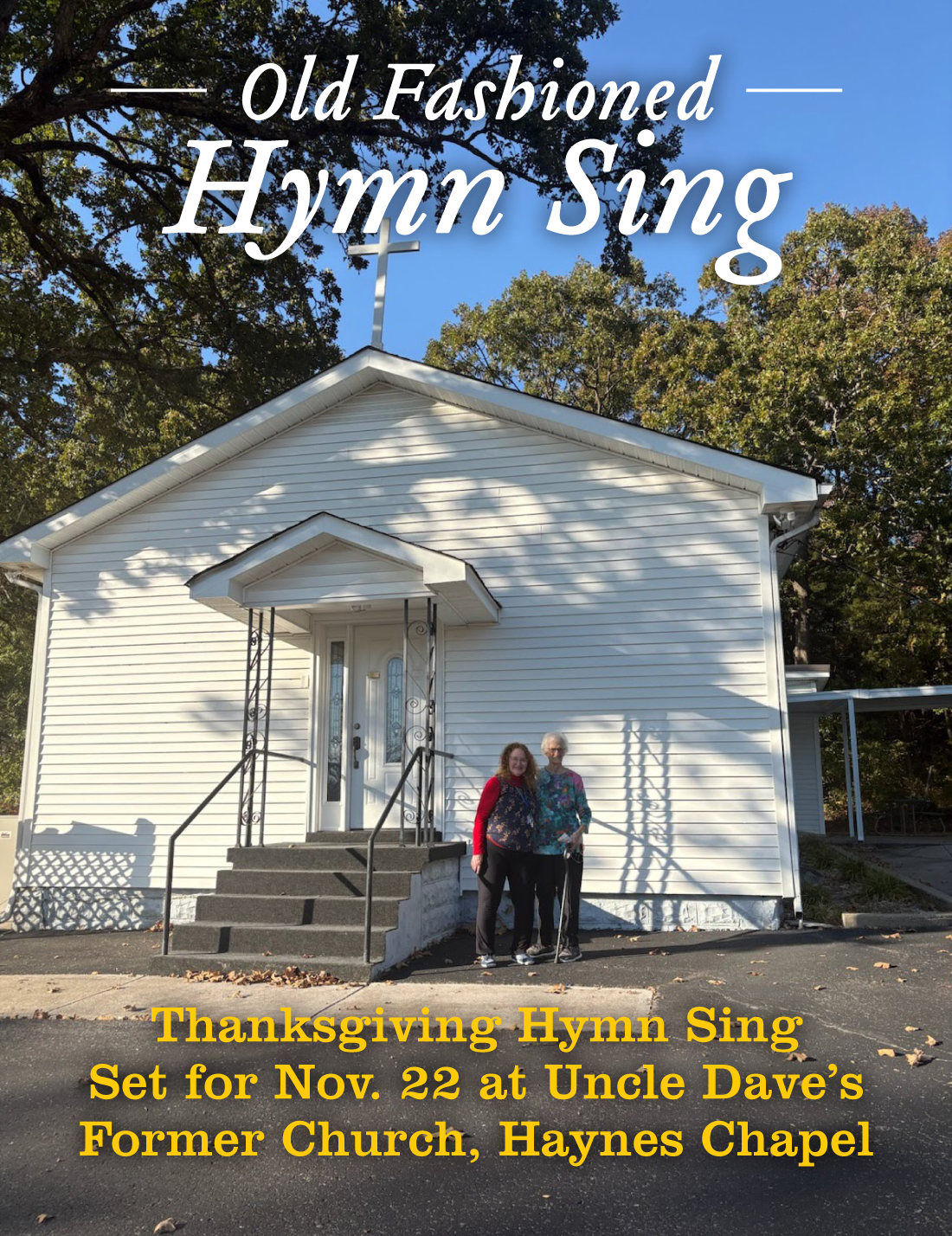
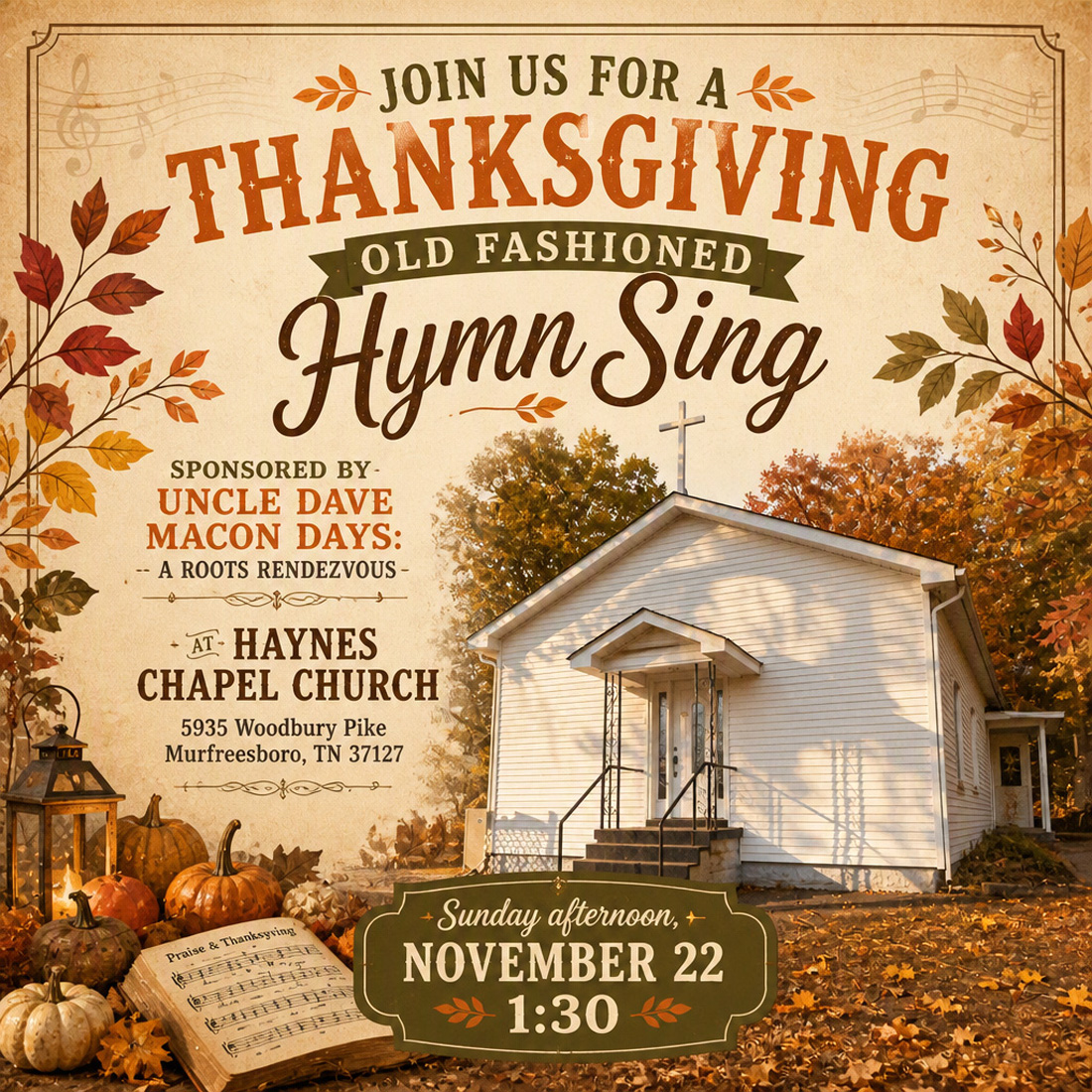
The community will gather at Haynes Chapel, 5935 Woodbury Pk., the church where Uncle Dave Macon once belonged, to celebrate an old-fashioned Thanksgiving through songs, music and shared gratitude.
Haynes Chapel shapes the setting for an old-fashioned Thanksgiving Hymn Sing, set for Sunday afternoon, Nov. 22, starting at 1:30 p.m. Family, friends, and the entire community can gather to pause and give thanks at this special event linking rural life to the authentic sacred sounds of the 19th century.
Jerry Messick will serve as song leader, with local instrumentalist Judy Woodruff Staley on piano. Stones River Bluegrass with Steve Hall and area vocalists Lisa Law, Sharon Clark, and Tammy Wright will also join the old-fashioned hymn singing. Events will be emceed by Ralph Vaughn, former president of the Rutherford County Chamber of Commerce.
Enjoy a glimpse of days gone by in this unique church setting tucked in nature’s beautiful Tennessee hillside at the church where Uncle Dave Macon, the first superstar of the Grand Ole Opry, once belonged.
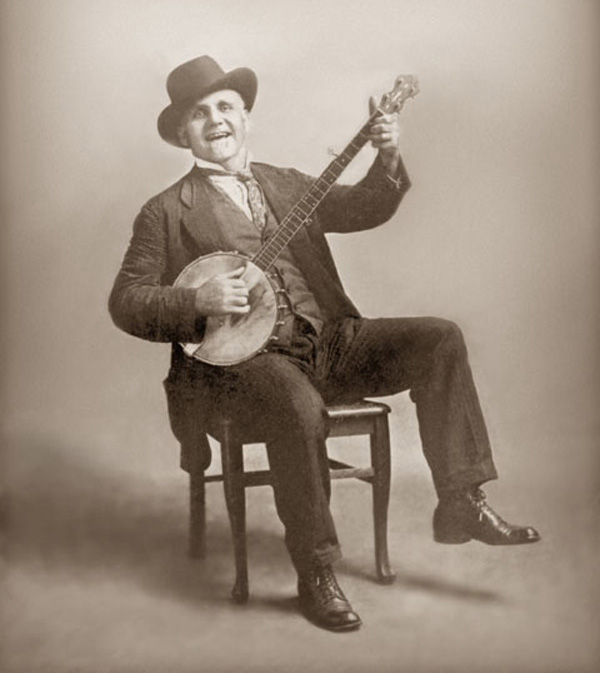
Faith was an important part of Uncle Dave’s life and music, and his connection to Haynes Chapel went beyond attending services, according to church leaders. When the church needed a new organ, Uncle Dave helped raise the money for it—and then hauled the hulking instrument to the church by freight wagon.
Everyone is welcome at the Nov. 22 hymn sing. Come and be thankful, renewed, and inspired. Refreshments will be served following the singing.
The roots of America’s music are a web of traditions intertwined with multiple histories, sacred as well as secular, rather than one genre, according to longtime Uncle Dave Macon Days president Gloria Christy, one of the organizers of the upcoming hymn singing.
In the 19th century and early 20th century, a Tennessee camp meeting was not only a worship experience, but it was also a cultural experience. The scene offered time to socialize and bring the community together. The camp-meeting tradition blurred the line between worship and public performance, giving evangelists and musicians techniques for holding attention, building participation, and turning a gathering into a memorable event.
Many rural churches were formed from camp meetings, including Haynes Chapel.
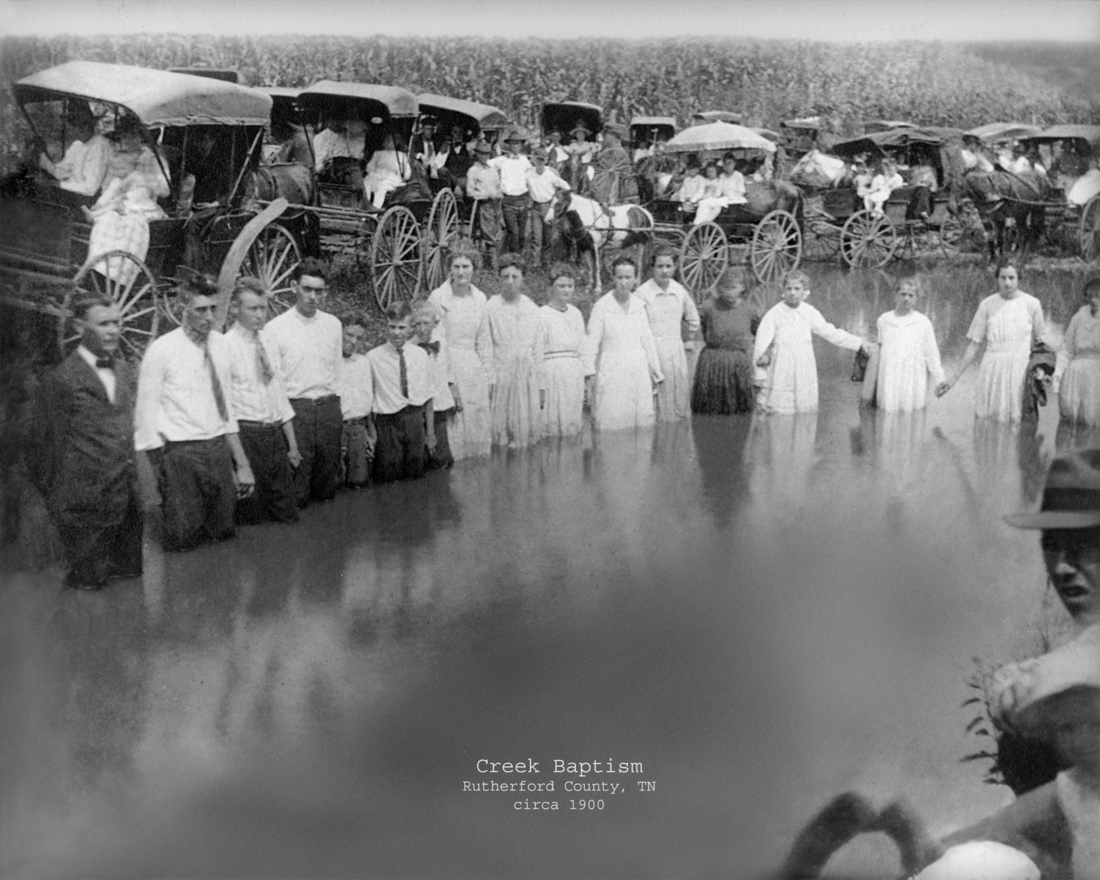
Haynes Chapel Methodist Church grew from the spiritual renewal inspired by evangelist Sam P. Jones’s 1884 revival in Murfreesboro. Residents living along Woodbury Pike joined together to establish a local place of worship. In 1887, J.C. Haynes purchased an acre from W.M. Freeman and donated it to the church. Neighbors contributed labor and materials, completing the building that same year. For well over a century, Haynes Chapel has carried forward this community-rooted legacy, with a historical connection to American folk and banjo legend Uncle Dave Macon.
Jones carried camp-meeting energy into rapidly growing towns and cities across the South. In May 1885, thousands gathered for his Nashville revival near 8th and Broadway. Captain Tom Ryman attended and would later commit himself to providing Nashville with a permanent place large enough for mass religious meetings.
Completed in 1892, the Union Gospel Tabernacle gave permanent architectural form to the mass-revival experience. After Ryman’s death in 1904, Jones urged that the building bear his friend’s name.
Dave Macon would not only go on to become the first superstar of the Grand Ole Opry—the famed radio program broadcast from the Ryman Auditorium for decades—Macon also served as the music director for Haynes Chapel Church on Woodbury Pike.
The master banjo player, singer, and comedian would frequently incorporate Southern gospel tunes and shape-note hymns into his energetic shows.
During this time, sacred songs appeared in secular programs, folk musicians drew on hymn traditions, Christian quartets adopted modern promotion, and radio welcomed gospel harmony.
Singing schools in Murfreesboro and throughout the South were vital community and educational gatherings that thrived from the 19th century well into the mid-1950s. “Singing masters” would travel to local churches and communities to teach vocal sight-reading, basic music theory and song leading. Pupils learned to read music using shape notes, matching geometric shapes like triangles, squares, circles and diamonds to scale degrees.
The Southern Gospel tradition left a deep imprint on American art and culture, and the Nov. 22 events aims to carry on these musical community traditions.
For more information, contact Gloria Christy at 615-668-0475 or gsc714@gmail.com.
___
Pictured, top: Gloria Christy and Mary Nell Miller at Haynes Chapel Church, where Miller has been a member most of her 94 years.